
ZONES – The ABC’s of JuniorGym
Written by
Z is for ZONES
Learning to move confidently isn’t only about understanding how our body moves, it’s also about understanding where it’s safe to move.
Zones help children understand how different spaces are used and how their movement needs to change depending on the environment.
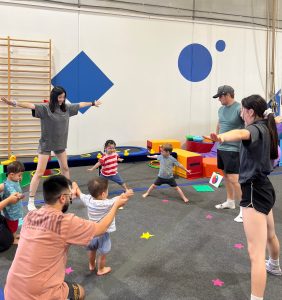
In Junior Gym, children learn that different areas of the gym have different purposes, boundaries and expectations. They begin to recognise where they should wait, where they can move, where equipment is being used and how to safely share a space with others.
These experiences help develop spatial awareness and safety awareness; skills children can take with them well beyond the gym.


Why Understanding Zones Matters
Develops spatial awareness
Understanding zones helps children recognise where their body is in relation to equipment, boundaries, objects and other people.
As their spatial awareness develops, children become better able to judge how much room they have, where they need to go and how to adjust their movements to the space around them.
Builds safety awareness
Different environments require different behaviours.
We can run in some spaces but need to walk in others. We can climb on playground equipment, but not on furniture. We stay on the footpath rather than walking onto the road.
Learning to recognise these differences helps children begin to make safer decisions about where and how they move.
Teaches boundaries
Physical boundaries can help young children understand the idea of rules and limits.
Learning to stop at a marker, wait outside an activity area or stay within a designated space gives children practical experience recognising and respecting boundaries.
Supports independence
As children become more aware of their environment, they can begin to make safe movement choices with less adult direction.
Knowing “where do I go next?”, “where should I wait?” and “where is it safe for me to move?” all contribute to becoming a more confident and independent participant.
How We Teach Zones in Junior Gym
In Junior Gym, children have lots of opportunities to practise recognising and moving safely through different spaces.
Clearly defined activity zones
Different areas of the gym are set up for activities such as balancing, climbing, jumping, swinging and tumbling.
Children learn that each space has a purpose and begin to understand how they should move within it.
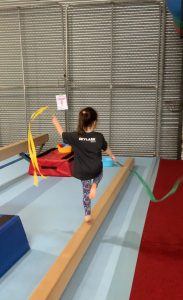
Guided obstacle courses
Following pathways through equipment teaches children to recognise where they are going, what is around them and how their body needs to move to safely reach the next activity.
Waiting and landing zones
Visual markers and designated spaces help children understand where to wait, where to land and when it’s safe to begin their turn.
Talking about safe spaces
Coaches use simple, consistent language to help children understand why we move differently in different areas.
Over time, these experiences help children become more aware of their body, their surroundings and the people sharing the space with them.
From the Gym to the Wider World
Understanding zones isn’t something children only need in gymnastics.
Think about all the different spaces a young child encounters:
The road and the footpath.
The playground and the classroom.
The swimming pool and the poolside.
The bike path and the grass.
Each environment has different boundaries and expectations.
By practising how to recognise spaces, follow pathways and adjust their movement in Junior Gym, children are developing concepts they can apply as they become more independent in the wider world.
The ABC’s of Junior Gym
This article is part of our ABC’s of Junior Gym series, where we explore the many ways movement supports your child’s development.
Each post focuses on a different skill or concept that children develop through Junior Gym and preschool gymnastics, helping to build:
- strong bodies
- confident movers
- active minds
- positive social skills
From Awareness and Balance to Confidence, Coordination and more, every letter highlights how movement supports whole-child development and school readiness.
Explore the other articles in the series:
- A is for Awareness
- B is for Balance
- C is for Coordination
- D is for Direction
- E is for Exploration & Effort
- F is for Focus
- G is for Growth Mindset
- H is for Hanging
- I if for Independence
- J is for Jumping
- K is for Kinesthetic Sense
- L is for Landing
- M is for Making Friends
- N is for Navigation
- O is for Overcoming Obstacles
- P is for Posture
- Q is for Quick Reactions
- R is for Rotation
- S is for Stability
- T is for Timing
- U is for Upper Body Strength
- V is for Vestibular System
- W is for Weight Bearing
- X is for Cross Patterning
Because when children learn to move well, they gain the confidence to explore, learn and grow.

