
OVERCOMING OBSTACLES – The ABC’s of JuniorGym
Written by
O is for Overcoming Obstacles
Every child will face obstacles as they grow. Some will be physical, like climbing over a block or balancing across a beam. Others will be mental, like trying something new, managing frustration or finding the confidence to keep going.
Overcoming obstacles is learning to work through physical and mental challenges when navigating equipment and movement tasks.
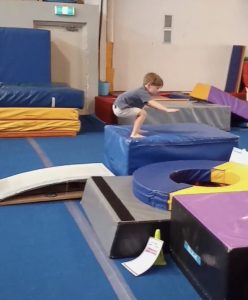
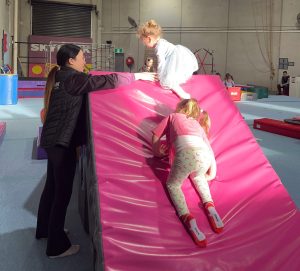
In Junior Gym and preschool gymnastics, children are regularly presented with age-appropriate challenges that encourage them to think, adapt and persevere. These experiences help children discover that challenges aren’t something to avoid—they’re opportunities to learn and grow.


Why Overcoming Obstacles Matters
Developing the ability to overcome obstacles helps children build important life skills that extend far beyond the gym.
Builds resilience
Not every challenge is easy the first time. When children learn to keep trying after a setback, they develop resilience and the confidence to face future challenges.
Encourages problem solving
Obstacle courses require children to think about how they will move through a challenge. Should they climb over, crawl under, balance across or find another way through?
Develops persistence
Children learn that success often comes through practice and effort. Each attempt helps them build confidence and determination.
Creates confident learners
When children overcome challenges independently, they begin to trust their own abilities and feel more capable trying new things.
How We Build Obstacle-solving skills in Junior Gym
In Junior Gym, obstacle courses are much more than just fun—they’re carefully designed opportunities for learning.
Climbing challenges
Children learn to assess equipment, plan their movements and build confidence as they climb.
Crawling and navigating spaces
Moving through tunnels, under bars or around equipment encourages children to think about how their body moves through different environments.
Balancing tasks
Balance activities challenge children to focus, adjust and persist when things feel tricky.
Problem-solving movement stations
Children are encouraged to work out how to move through different sections of a circuit, building independence and decision-making skills.
Through these experiences, children learn that challenges are something to approach with curiosity, effort and confidence.
Obstacles Today, Confidence Tomorrow
One of the most valuable lessons children can learn is that it’s okay for things to feel difficult sometimes.
Every time a child climbs a little higher, balances for a little longer or tries a skill again after an unsuccessful attempt, they are building more than physical ability—they are building the mindset that says:
“I can keep trying.”
And that’s a skill that will support them in school, sport and life.
The ABC’s of Junior Gym
This article is part of our ABC’s of Junior Gym series, where we explore the many ways movement supports your child’s development.
Each post focuses on a different skill or concept that children develop through Junior Gym and preschool gymnastics, helping to build:
- strong bodies
- confident movers
- active minds
- positive social skills
From Awareness and Balance to Confidence, Coordination and more, every letter highlights how movement supports whole-child development and school readiness.
Explore the other articles in the series:
- A is for Awareness
- B is for Balance
- C is for Coordination
- D is for Direction
- E is for Exploration & Effort
- F is for Focus
- G is for Growth Mindset
- H is for Hanging
- I if for Independence
- J is for Jumping
- K is for Kinesthetic Sense
- L is for Landing
- M is for Making Friends
- N is for Navigation
Because when children learn to move well, they gain the confidence to explore, learn and grow.

