I love seeing little ones explore movement for the first time. When babies are under 2, every new skill feels like a big achievement. One week they are rolling, the next they are crawling, pulling themselves up, or even taking those wobbly first steps. These are all exciting moments, and they tell me a lot about how ready they are for more active play, like gymnastics.
Parents often ask me if their baby is too young to start a gymnastics class. The truth is, some babies are ready much earlier than you might think. It is not about being able to do cartwheels or flips. It is about showing small signs of physical, social, and emotional growth that make a fun, safe class a great place to learn.
In our baby gymnastics classes for children under 2, I see them grow stronger, braver, and more curious every week. I also see parents growing in confidence as they learn how to help their baby move in new ways. Watching those moments is one of my favourite parts of coaching.
Every baby develops at their own pace, but there are clear signs that tell me they are ready to start exploring the gym.

Why Do I Recommend Baby Gymnastics Classes Under 2?
Parents sometimes wonder if it is worth starting so young. My answer is always yes, as long as the class is tailored to their age and stage of development. Babies learn a great deal through movement, and the right environment helps them develop skills that will support everything from walking to climbing to running later on.
A Safe Space for Natural Movement
Babies are natural movers. From the moment they discover they can roll, they want to see what else their bodies can do. Baby gymnastics classes for children under 2 provide a safe, padded space for them to explore movements while building important skills for later in life.
Building Strength and Balance
One of the biggest benefits is strength. Simple activities like pulling up on a soft block, crawling over a low wedge, or bouncing with support on a mini trampoline all help muscles grow in a way that feels like play. Balance grows, too. Even just standing on a slightly bumpy surface or walking along a low beam with a parent’s hand can make a huge difference to how steady they feel.
Boosting Confidence Through Play
Classes also help babies grow in confidence. The gym is filled with a variety of textures, shapes, and heights to explore. With a parent close by, they can try something new without feeling scared. Over time, I see children become more curious, more willing to try, and take pride in their accomplishments.
A Special Time for Parents and Babies
It is not just for the babies. Parents get to connect, laugh, and share the joy of those little milestones. It is a time when learning and bonding happen together, which is why I recommend it so often.

How Do I Know a Baby Is Physically Ready?
Every baby grows at their own pace, but there are some little signs I watch for in baby gymnastics classes under 2. These signs indicate that a child is ready to safely enjoy the activities and get the most out of the class. It is not about doing tricks; it is about having the body control and strength to explore safely.
Rolling and Crawling with Confidence
If a baby can roll from front to back or back to front, they are already learning how to control their body. Crawling is another good sign. It demonstrates that they can coordinate their arms and legs, which is a crucial aspect of many early gymnastics activities.
Pulling Up or Cruising
When I see a baby pulling themselves up on furniture or cruising along while holding on, I know they are starting to build the leg strength and balance they will need for standing activities in the gym.
Taking Supported or Independent Steps
Some babies come to class already walking, others are still holding onto mum or dad. Either way is fine. If they are trying to move upright, even with support, they can join in low balance beam walks, soft climbing ramps, and short obstacle courses.
Showing Good Head and Neck Control
Strong head and neck control makes it safer for babies to enjoy activities like gentle bouncing, rolling, or hanging from a low bar with help. This usually develops well before their first birthday.
The Key is Comfort and Safety
If a baby moves with control for their stage, shows interest in exploring, and seems comfortable with gentle support, they are usually ready for a class. Every milestone is a building block for the next.
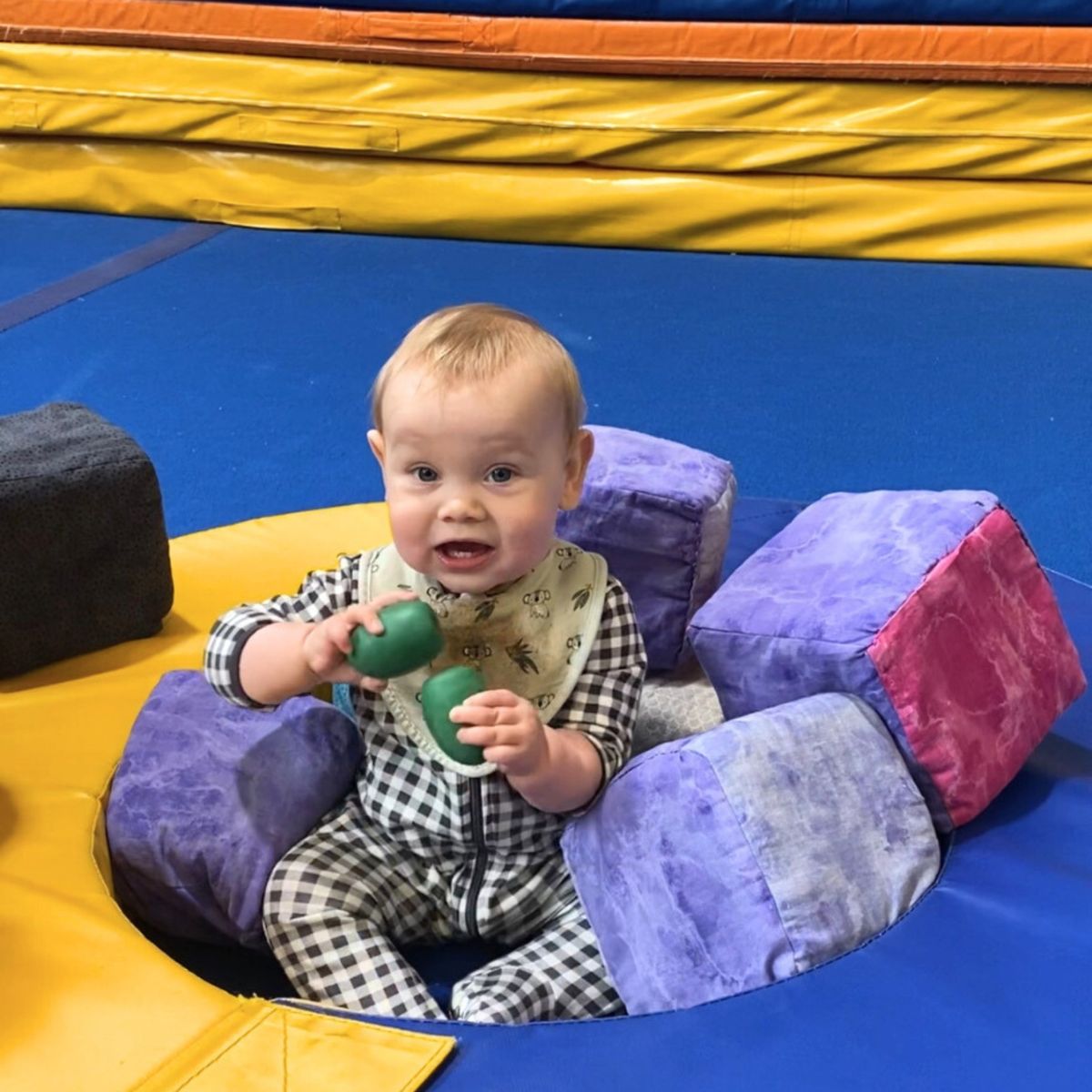
How Do I Know a Baby Is Physically Ready?
Every baby grows at their own pace, but there are some little signs I watch for in baby gymnastics classes under 2. These signs indicate that a child is ready to safely enjoy the activities and get the most out of the class. It is not about doing tricks; it is about having the body control and strength to explore safely.
Rolling and Crawling with Confidence
If a baby can roll from front to back or back to front, they are already learning how to control their body. Crawling is another good sign. It demonstrates that they can coordinate their arms and legs, which is a crucial aspect of many early gymnastics activities.
Pulling Up or Cruising
When I see a baby pulling themselves up on furniture or cruising along while holding on, I know they are starting to build the leg strength and balance they will need for standing activities in the gym.
Taking Supported or Independent Steps
Some babies come to class already walking, others are still holding onto mum or dad. Either way is fine. If they are trying to move upright, even with support, they can join in low balance beam walks, soft climbing ramps, and short obstacle courses.
Showing Good Head and Neck Control
Strong head and neck control makes it safer for babies to enjoy activities like gentle bouncing, rolling, or hanging from a low bar with help. This usually develops well before their first birthday.
The Key is Comfort and Safety
If a baby moves with control for their stage, shows interest in exploring, and seems comfortable with gentle support, they are usually ready for a class. Every milestone is a building block for the next.
What Social and Emotional Clues Do I Notice?
Physical skills are important, but they are not the only signs I look for in baby gymnastics classes under 2. A child’s social and emotional readiness can make their first experience in the gym smoother and more enjoyable. Even tiny changes in behaviour can show me they are ready to explore in a group setting.
Curiosity About New Spaces
When a baby looks around, reaches for new toys, or watches other children with interest, it tells me they are ready for fresh experiences. The gym is full of colours, shapes, and textures that encourage exploration.
Comfort With Parent Support
For babies under 2, parents are their safe base. If they are happy to hold your hand or let you guide them over soft blocks and mini beams, they are more likely to enjoy the activities without feeling anxious.
Watching and Copying Others
Some babies start copying movements they see, like clapping, crawling towards another child, or reaching for the same object. This is a sign they are ready to learn through imitation, which is a big part of gymnastics at this age.
Enjoying Gentle Interaction
Even if they are shy, a baby who smiles or relaxes around other children and adults in the gym is starting to feel comfortable in a shared space. This comfort will grow with each class.
Able to Focus for Short Moments
Young children cannot concentrate for long, but if they can stay engaged with an activity for even 30 seconds, it is enough to join in short, fun circuits and games.
How Do Baby Gymnastics Classes Under 2 Keep Learning Safe?
Safety is the first thing that comes to mind when planning baby gymnastics classes for children under 2. At this age, children are still developing balance, coordination, and strength, so every part of the class needs to be set up to accommodate their stage of development. A safe environment lets them explore without unnecessary risks, and it also helps parents relax and enjoy the experience.
Soft, Age-Appropriate Equipment
All equipment for babies under 2 is designed to be low to the ground and padded for added comfort. We use soft mats, small foam shapes, and mini beams so that falls are gentle and manageable. This lets babies try new movements without the risk of big tumbles.
Parent Hands-On Support
Parents are always right there, guiding their child through each activity. Your hands give the extra stability they need until they are ready to balance on their own. It is also a lovely bonding moment for both of you.
Small Steps Before Big Skills
We start with movements that match a baby’s current abilities, like rolling down a small wedge or crawling over a short block. These small steps build the strength and control needed for more challenging skills later on.
Coach Guidance Every Step of the Way
During class, I discuss with parents how to hold, spot, and support their child safely. This way, everyone knows how to help without putting strain on tiny joints or muscles.
A Pace That Suits Each Baby
No one is pushed to do something they are not ready for. Every activity can be adjusted to ensure the baby feels secure, whether that means lowering equipment, slowing down movements, or providing extra support.

What Skills Do Babies Start Building Right Away?
From the very first class, I see babies picking up new skills. They might seem like small changes at first, but these little steps quickly add up to significant progress. Baby gymnastics classes for children under two focus on movements that match their stage of development, allowing them to succeed and enjoy themselves from the start.
Balance and Stability
Activities like walking along a low beam with your hand for support or standing on a soft, uneven surface help babies learn how to steady themselves. This balance training makes everyday movements, such as walking on grass or stepping off a curb, much easier later on.
Climbing Confidence
Soft foam blocks, mini ramps, and small steps provide babies with a safe opportunity to climb. Climbing builds both strength and problem-solving skills as they figure out where to place their hands and feet.
Rolling and Crawling Control
We use wedges and mats to practise rolling in different directions and crawling over small obstacles. This strengthens their core muscles and improves coordination between arms and legs.
Spatial Awareness
Babies begin to learn how their bodies move in space. Whether they are crawling through a tunnel or ducking under a low bar, they are figuring out where their head, arms, and legs are in relation to the world around them.
Grip and Upper Body Strength
Even a short hang from a low bar with parent support helps build grip strength and prepares them for more active play as they grow.
How Can Parents Help Their Baby Get Ready?
Starting baby gymnastics classes under 2 is exciting for both parents and children. You can help your little one feel confident and comfortable by encouraging small, fun movements at home before their first class. These don’t need to be structured exercises, just playful moments that help build the skills they will use in the gym.
Play on the Floor Together
Get down on the floor with your baby. Crawl alongside them, roll together, or gently encourage them to reach for toys just out of arm’s length. This builds strength and coordination while keeping it fun.
Encourage Pulling Up and Supported Walking
Place safe, stable furniture or low surfaces nearby so they can practise pulling to stand. Walking with your hands for support helps them build balance and confidence for activities like beam walks in the gym.
Make Upside-Down Fun
Hold your baby securely and let them gently tip upside down for a few seconds. This could be as simple as leaning them back in your arms or doing a slow forward roll over your lap. It helps them become accustomed to various body positions.
Bring Familiar Comforts to Class
On the day of their first session, pack a water bottle, comfortable clothing, and maybe a favourite small toy for reassurance. Soft, stretchy clothes are best because they allow for free movement.
Keep it Positive and Relaxed
Your baby will pick up on your energy. If you smile, cheer them on, and keep things light, they will feel more confident to try new things in class.
What Happens in a Baby Gymnastics Class Under 2?
Parents often wonder what actually happens in baby gymnastics classes under 2. The sessions are designed around short, engaging activities that align with your baby’s stage of development. Everything is about movement, play, and building confidence while keeping safety as the top priority.
A Gentle Warm-Up
We begin with simple songs and movements to help babies get moving and feel comfortable. This might include clapping, gentle stretches, or bouncing while sitting on a parent’s lap. It sets a happy, relaxed tone for the rest of the class.
Guided Skill Stations
The gym is equipped with various activity stations, including small climbing blocks, low beams, tunnels, and mini trampolines. Parents guide their child through each one with my help. Babies can take their time and repeat stations they enjoy the most.
Free Exploration Time
There is always time for babies to explore at their own pace. Some might spend extra time crawling over a foam wedge, while others are drawn to the tunnels or rolling mats. This freedom encourages curiosity and confidence.
Fun Games to Build Skills
We play simple games that match their age, like rolling a ball back and forth, crawling to reach a toy, or stepping over a small obstacle. These games sneak in important skill-building without feeling like “lessons.”
A Calm Finish
Each class concludes with a slower activity, such as gentle rocking, blowing bubbles, or singing a group song. This helps babies wind down so they leave feeling happy and settled.

When Do I Say “Yes, They’re Ready to Start”?
Deciding when to start baby gymnastics classes under two is not about hitting one exact milestone. I look for a mix of small signs that show a baby is ready to enjoy and benefit from the class. These signs can appear at different ages for different children.
A Mix of Physical Skills
If a baby is rolling, crawling, pulling up, or starting to walk with or without support, it typically means they have sufficient control to attempt basic gymnastics activities safely. Even one or two of these skills is a good start.
Interest in Exploring
A baby who looks around, reaches for new things, or wants to move toward interesting objects is showing they are ready to try new activities in the gym.
Comfort With Parent Support
If they are happy to be guided by your hands, lifted over a small obstacle, or held steady while they balance, they will feel secure during class.
Positive Reactions to New Environments
It is normal for some babies to be shy at first, but if they warm up after a short time and start engaging, they are likely to settle in quickly.
Knowing There’s No “Too Early”
Some parents wait until their baby is walking before joining, but it is perfectly fine to start earlier. Every child progresses at their own pace, and starting sooner can help them reach milestones faster in a fun, safe way.
How Do I Choose the Best Class for Your Baby?
Not all baby gymnastics classes under 2 are the same. Finding the right one will make a big difference to how safe, happy, and confident your little one feels. I always tell parents to look for a class where both the child and the parent feel comfortable and supported from the start.
Small Class Sizes
Babies learn best when they have space to move and the coach has time to give each family attention. Smaller groups also make it easier for shy children to feel at ease.
Qualified and Caring Coaches
Look for coaches who understand early childhood development and have experience with young children. They should be patient, encouraging, and ready to adapt activities to match your baby’s needs.
Safe and Clean Environment
Check that all equipment is age-appropriate, well-maintained, and padded. The gym should also be kept clean to protect your baby’s health.
Parent Involvement
For under-2 classes, parents should be actively involved in spotting and guiding their baby. This keeps the child safe and helps them feel secure.
Trial Sessions Before Committing
Many gyms offer trial classes. This is a great way to see how your baby responds to the environment and the coach before committing to a term.
FAQs About Baby Gymnastics Classes Under 2
1. Can my baby attend if they are not walking yet?
Yes. Many babies join before they can walk. Crawling, rolling, or pulling up are all great starting points for learning in the gym. Activities are adapted to match your baby’s current abilities.
2. How long is a baby gymnastics class?
Most classes for children under 2 years old run for 30 to 45 minutes. This is long enough for active play but short enough to keep their attention and energy levels steady.
3. Do I need any special clothing or shoes for my baby?
Comfortable, stretchy clothes are best, as they allow your baby to move freely and comfortably. Babies usually participate barefoot for better grip and balance. Parents should also wear comfortable clothing as they will be moving with their child.
4. Will my baby be safe around the equipment?
Yes. All equipment is padded, low to the ground, and set up for young children. Parents are hands-on during the session, and the coach guides you on how to support your child safely.
5. Can I bring my older child to watch or join in?
For safety, it is best to focus on one child at a time during class. Older siblings can sometimes join in family-style sessions if the gym offers them, but usually, baby classes are for the registered child only.
Final Thoughts From a Coach
Baby gymnastics classes under 2 are about so much more than learning skills. They provide children with a safe and fun space to explore movement, build confidence, and form positive connections with their parents. I have seen even the shyest babies blossom into curious, active little movers after just a few weeks.
Every child’s journey looks different. Some take to climbing straight away, while others prefer gentle rolling and crawling before tackling anything higher. The important thing is that they are supported, encouraged, and free to learn at their own pace.
If you are wondering whether your baby is ready, remember that readiness is about interest, comfort, and basic movement skills, not age alone. Even if your little one is beginning to crawl, they can still benefit from the sights, sounds, and gentle challenges of a gymnastics class.
Ready to See Your Baby in Action?
We welcome babies from as young as they can crawl into our baby gymnastics classes under two here at Skylark Sports. You will be right by their side, helping them climb, balance, roll, and laugh their way through the session.
Book Your Trial Class Today
Come and see how much fun your little one can have. Book a trial class with us and watch their confidence grow from the very first visit. Spots are limited to keep classes small, so secure your place now and start your baby’s gymnastics journey.