Gymnastics isn’t just for athletes aiming to compete in the Olympics—it’s for everyone! Whether you’re a young child with lots of energy, a teen looking to try something new, or an adult wanting to stay fit and flexible, gymnastics has something to offer. This sport builds more than just physical strength; it develops confidence, discipline, and a strong sense of self. It doesn’t matter if you’re new to gymnastics or already comfortable with handstands—there’s a type of gymnastics for everyone.
What I love most about gymnastics is that it’s both challenging and rewarding, pushing you to find new strengths within yourself. Plus, with so many different types, from artistic to rhythmic to trampoline, you’re bound to find a style that speaks to you. Let’s dive into the history of gymnastics and explore what makes each type unique so you can discover the perfect fit for yourself or your child.
History of Gymnastics
Gymnastics has existed for thousands of years, with roots going back to ancient Greece. Originally, it was a form of training for soldiers who needed to stay agile and fit for battle. The word itself comes from the Greek word “gymnos,” meaning “naked,” since athletes at the time would practice without clothing, focusing purely on skill and movement.
Over time, gymnastics evolved from military exercises to a structured sport with rules, competitions, and different styles. Artistic gymnastics, for example, made its Olympic debut in the 1896 Games, and rhythmic gymnastics joined later in 1984. Each style grew its own identity and techniques, but at the heart of each was a focus on body control, flexibility, and strength. This history helps us appreciate how gymnastics isn’t just a sport; it’s a tradition and an art form that has adapted to each generation’s interests and needs.

Types of Gymnastics
Gymnastics is diverse, with each type offering something unique. Let’s look at some of the most popular types:
Artistic Gymnastics
Artistic gymnastics is the most well-known type and is often featured in the Olympics. Men and women compete on different apparatuses, and women have events like the balance beam, uneven bars, floor exercise, and vault. In contrast, men compete on the rings, pommel horse, and high bar, among others. Each apparatus requires a unique set of skills; for example, the balance beam demands intense concentration, while the vault emphasizes speed and power.
What I love about artistic gymnastics is the combination of power and grace. Watching an athlete go from a dynamic tumbling pass to a delicate balance on the beam is mesmerizing. For beginners, it’s a fantastic choice because it develops a wide range of skills—strength, flexibility, balance, and rhythm. Artistic gymnastics is perfect for anyone who wants to experience the core elements of gymnastics in a traditional and structured way.
Rhythmic Gymnastics
Rhythmic gymnastics is a visually stunning combination of dance and gymnastics. It’s performed only by women at the competitive level and involves using equipment like ribbons, hoops, balls, and clubs. Each routine is set to music and focuses on grace, flexibility, and artistry.
In rhythmic gymnastics, flexibility and coordination are crucial, as athletes perform intricate moves while keeping their apparatus in motion. I’ve seen athletes put on beautiful, almost hypnotic performances with rhythmic gymnastics—it’s truly an art form. If you or your child has a background in dance or a love for music and movement, rhythmic gymnastics could be the perfect match.
Trampoline Gymnastics
Trampoline gymnastics focuses on high-flying skills and aerial stunts performed on a trampoline. This discipline requires serious courage and body control, as athletes perform flips and twists mid-air before landing back on the trampoline. Trampoline gymnastics includes individual and synchronized events, where two athletes perform routines simultaneously.
What’s amazing about trampoline gymnastics is the feeling of weightlessness. I’ve had students who absolutely love the thrill of flying high and practising flips in the air. For anyone looking to challenge themselves with acrobatic skills but without the complexity of multiple apparatus, trampoline gymnastics is an exhilarating choice.
Acrobatic Gymnastics
Acrobatic gymnastics, often called “Acro,” is all about teamwork. In this type, athletes work in pairs or groups to create balance routines that involve lifting, balancing, and throwing each other in synchronized performances. There’s no equipment here—just the gymnasts working together to pull off impressive stunts.
The beauty of acro is its reliance on teamwork and trust. Each person has a role, like the “base” who provides support and the “flyer” who performs the tricks. It’s inspiring to see athletes grow together, learn each other’s strengths, and rely on each other for success. For those who love the idea of working as a team and building strong bonds with others, acro is a fantastic type of gymnastics.
Aerobic Gymnastics
Aerobic gymnastics focuses on high-energy, fast-paced routines performed to upbeat music. Unlike other types that focus on apparatus or acrobatic stunts, aerobic gymnastics emphasizes endurance, coordination, and rhythm. It’s often performed in groups, which makes it perfect for those who love teamwork.
This type of gymnastic if lively, fun discipline that’s as much about fitness as it is about performance. For anyone looking to stay fit and have fun while doing it, aerobic gymnastics is ideal. It combines the challenge of gymnastics with the energy of a cardio workout.
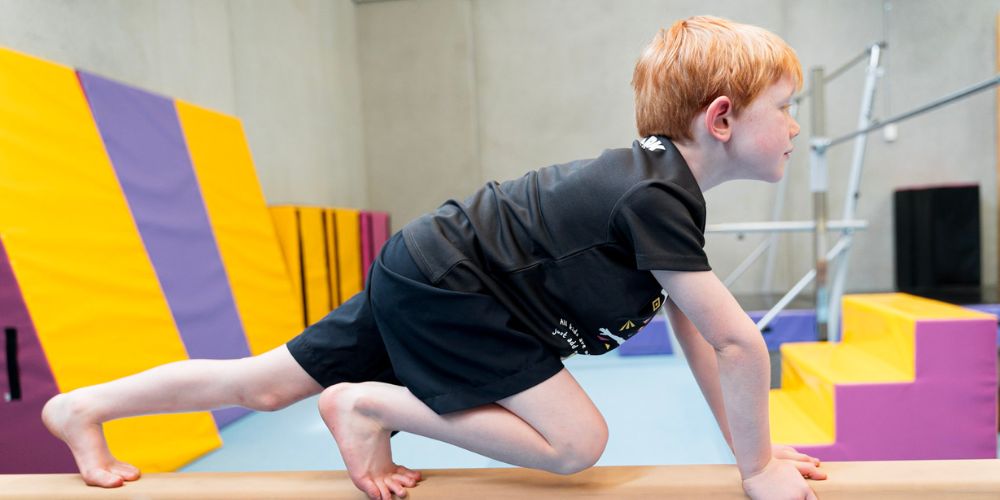
How to Choose the Right Type of Gymnastics for You (or Your Child)
Finding the right style of gymnastics can make a big difference in enjoyment, progress, and commitment. Here are some things to think about as you explore the different types of gymnastics.
Consider the Skill Set and Personality Traits
Each type of gymnastics focuses on different skills, and matching these with your or your child’s personality and strengths can make a huge impact. For example, if you or your child loves high-energy activities, trampoline or aerobic gymnastics might be the best fit because of their fast-paced, dynamic nature. Artistic gymnastics is a good choice for someone who enjoys both strength and creativity, as it combines powerful movements with graceful elements. On the other hand, rhythmic gymnastics is ideal for those with an appreciation for dance, fluidity, and artistic expression.
Tip: Think about whether you or your child would enjoy routines based on power, teamwork, or artistry. This can help narrow down the options right from the start.
Decide Between Individual vs. Team-Based Events
Gymnastics offers both individual-focused and team-based styles. Artistic, trampoline, and rhythmic gymnastics are mostly individual disciplines where athletes focus on their routines. However, acrobatic gymnastics requires a strong sense of teamwork since it’s performed in pairs or groups, and each athlete has a specific role.
Suppose your child loves social interaction and teamwork. In that case, acrobatic gymnastics may be a wonderful fit, as it builds trust, cooperation, and camaraderie. But they’re more independent and self-motivated. In that case, they might thrive in an individual style like artistic or trampoline gymnastics, where they can focus on personal improvement.
Think About Their Comfort with Height and Speed
Some types of gymnastics involve heights, flips, or faster movements, which might be thrilling to some but intimidating to others. For instance, trampoline gymnastics is all about gaining height and performing flips mid-air, so it requires a bit of courage and an interest in aerial skills. Acrobatic gymnastics, meanwhile, involves lifts and holds, which is manageable if you’re nervous about heights.
If your child is an adventurous type who enjoys climbing and jumping, they may love trampoline gymnastics. If they’re more cautious, styles like artistic gymnastics on the floor or rhythmic gymnastics, where routines are performed on the ground, might feel more comfortable.
Assess Interests in Dance and Artistic Expression
Rhythmic gymnastics is highly dance-oriented and involves choreographed routines set to music, often with apparatus like ribbons, balls, and hoops. Suppose you or your child has an interest in dance or artistic performance. In that case, rhythmic gymnastics may be a wonderful outlet for creativity.
Artistic gymnastics also involves elements of performance, especially in the floor routine, where routines are set to music and include expressive movements. However, it places more emphasis on strength and precision, so it’s ideal for those who enjoy a balance between strength and dance. Consider rhythmic gymnastics if pure artistry and dance appeal more. In contrast, artistic gymnastics can be ideal for those who want a mix of strength and expression.
Consider Physical Conditioning and Goals
Each type of gymnastics demands a unique set of physical abilities. Artistic gymnastics requires a lot of strength and flexibility, as athletes need to support their weight on equipment like rings or bars. Rhythmic gymnastics places a higher emphasis on flexibility and coordination rather than upper body strength. Aerobic gymnastics, on the other hand, is cardio-intensive and demands stamina and rhythm, making it an excellent choice for those interested in fitness and endurance.
If building strength is a key goal, artistic or acrobatic gymnastics might be the best fit. If flexibility and dance-like movement appeal, rhythmic gymnastics is ideal. And if cardio fitness is a priority, aerobic gymnastics offers a high-energy, heart-pumping experience.
Trial Classes: A Great Way to Test Each Style
Most gymnastics gyms or studios offer beginner or trial classes that allow students to experience each type firsthand. Trying a few different styles can provide insight into what feels best. These trial classes let students meet instructors, explore the facilities, and experience the unique demands of each type without committing right away.
From my experience, many young gymnasts and parents discover preferences they wouldn’t have anticipated during these trials. A trial class can be invaluable, especially if you or your child is unsure which type of gymnastics might be the best fit. Plus, it can build excitement and confidence before starting a more structured program.
Set Short and Long-Term Goals Together
Setting some goals before choosing a type of gymnastics can help determine the best fit. For example, if the goal is to develop a lifelong fitness habit, something aerobic and endurance-focused, like aerobic gymnastics, might be ideal. For kids interested in competing and progressing to higher levels, artistic gymnastics could be more suitable since it’s one of the most structured and widely recognized types in terms of competitions and skill progression.
Think about short-term goals, like building strength or learning new skills, as well as long-term goals, like competing or joining a team. Having a conversation about these goals can help everyone feel clear and motivated when selecting a type of gymnastics.
Frequently Asked Questions
Is gymnastics safe for beginners?
Yes! When taught correctly, gymnastics is safe, and coaches will help beginners progress at a comfortable pace.
What’s the best age to start gymnastics?
It varies, but kids as young as three can start with basic classes. For older kids and adults, there is always time to start, as there are beginner programs for all ages.
Do I need to be flexible to start gymnastics?
Not at all! Flexibility will improve with practice, and most beginners need to be more flexible at first.
Can I try different types of gymnastics?
Absolutely! Many gyms offer introductory programs that let you experience different types.
How can I build strength for gymnastics?
Bodyweight exercises, like push-ups, planks, and squats, are fantastic for building the core and upper body strength needed for gymnastics.
Conclusion
Gymnastics is a sport that’s as diverse as it is rewarding. From the elegance of rhythmic gymnastics to the adrenaline of trampoline, each type has its unique appeal. As a coach, I’ve had the pleasure of watching athletes of all ages discover and fall in love with the sport that fits them best. Remember, it’s not about being the best right away—it’s about enjoying the journey, building confidence, and discovering what your body and mind can achieve.
So, whether you’re thinking of trying gymnastics yourself or finding the right style for your child, take that first step. Try a few classes, keep an open mind, and enjoy the adventure. Gymnastics has something special to offer everyone—go out and discover what it holds for you!