If you’ve spent any time in a gymnastics gym, you’ve probably heard it: a thud, a stumble, or a soft oomph followed by a determined gymnast getting back up. Here’s the truth—falling is part of gymnastics. Whether you’re just starting or working on advanced skills, falling happens to everyone. It’s not a sign of failure—it’s a sign that you’re pushing yourself, trying new things and learning.
As a gymnastics training coach, I see it all the time. A gymnast tries a skill, misses a landing, and falls. And you know what? That’s okay. In fact, it’s more than okay—it’s necessary. Falling is how we figure out what works, what doesn’t, and how to improve. The important thing is knowing how to fall safely so you can avoid injury and keep building confidence.
In this blog, I want to talk to you about why falling is completely normal in gymnastics, how to fall in a way that keeps you safe, and how to bounce back after a fall, both physically and mentally. Learning to fall the right way isn’t just about safety—it’s about growing stronger, braver, and more resilient every time you get back up.

Common Types of Falls in Gymnastics
Falling looks different depending on the skill, apparatus, and level of experience. Understanding the most common types of falls helps coaches teach safety and helps gymnasts prepare mentally and physically. Here are some of the main types we see in the gym:
1. Forward Falls
These happen most often on the floor and beam during skills like front handsprings, aerials, or round-offs. Gymnasts typically fall onto their hands, arms, or shoulders.
What we teach: Roll out, if possible, to protect the head and spine. Keep your elbows soft, avoid locking your arms, and round your back on impact.
2. Backwards Falls
These are common in back handsprings, back tucks, and beam dismounts. A gymnast may under-rotate and land on their back or hips.
What we teach: Tuck your chin, roll through your upper back, and avoid stiff arms behind your body. Controlled bailing and use of soft surfaces are key here.
3. Side Falls
Seen on the beam and sometimes on the floor, especially during turns or off-balance landings. These can be awkward and surprising.
What we teach: Stay loose, avoid reaching out with a straight arm, and absorb the fall with bent elbows and a soft landing surface.
4. Fall from Height (Bars, Beam Dismounts)
These falls are more complex because they come from an elevated surface, such as bars or a high beam. They can result in flat backs, side landings, or uncontrolled drops.
What we teach: Use mats, spotters, and progressions to prevent injury. Teach gymnasts to “ride the fall” and land on larger body surfaces to distribute impact.
5. Awkward Bails
Sometimes, gymnasts recognise mid-air that the skill isn’t going to be completed. These “abort” moments can look messy but are a sign of body awareness.
What we teach: Practice bailing safely and with control—step out, roll, or twist away if needed. Better a smart fall than forcing a bad landing.
By recognising these common types of falls, we can prepare gymnasts to respond with the right technique, reducing injury and boosting confidence.
Injury Statistics & Why Safe Falling Matters
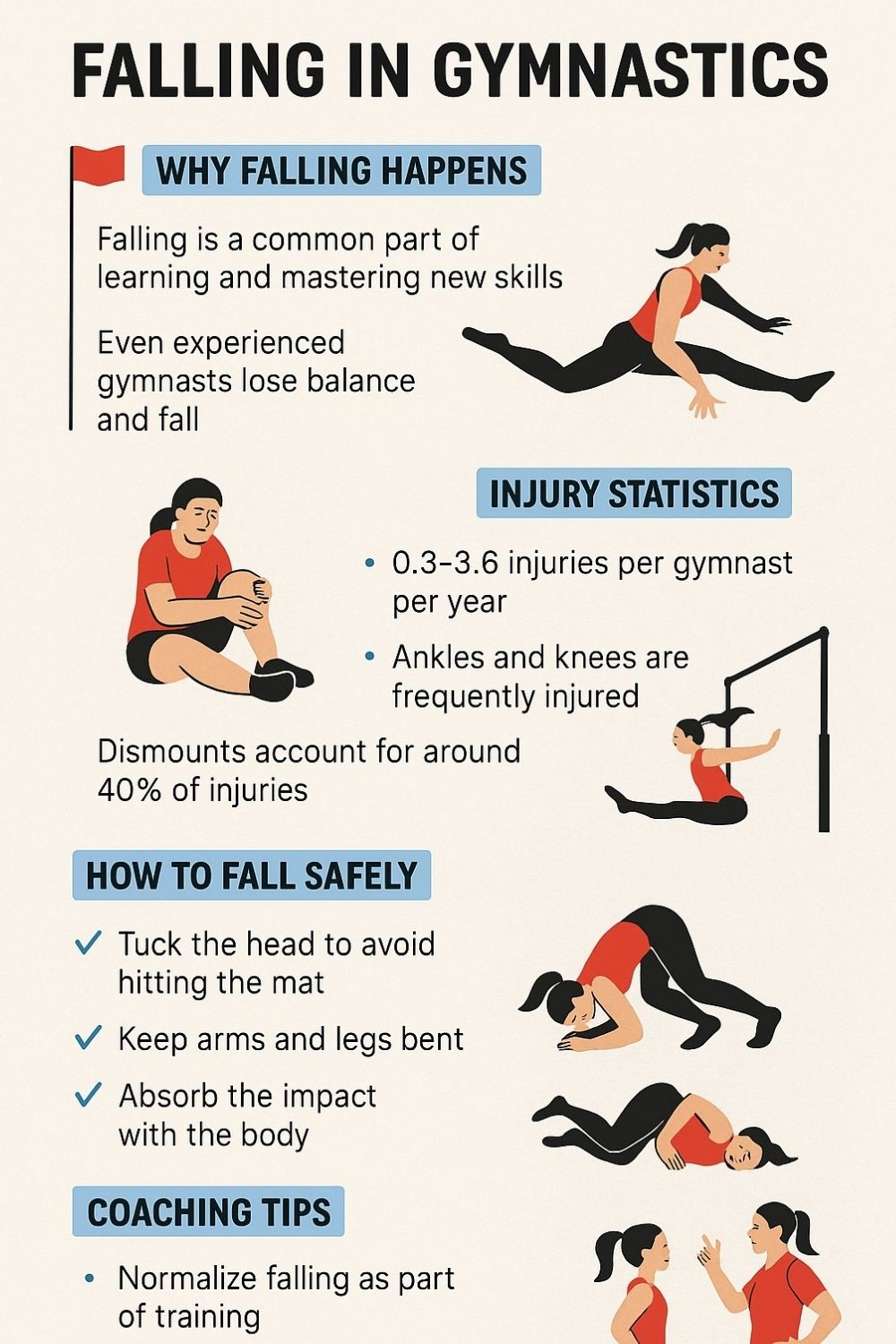
Injury prevention is one of the biggest reasons we teach gymnasts how to fall safely. While falling is a normal part of the sport, knowing how to fall can make a huge difference in reducing injury severity and frequency.
What the Research Says:
These numbers are important—but they also tell us something hopeful: many of these injuries are preventable with proper fall training and awareness. When gymnasts learn to roll out, absorb force, and bail smart, they reduce the chance of serious injury while keeping their confidence intact.
X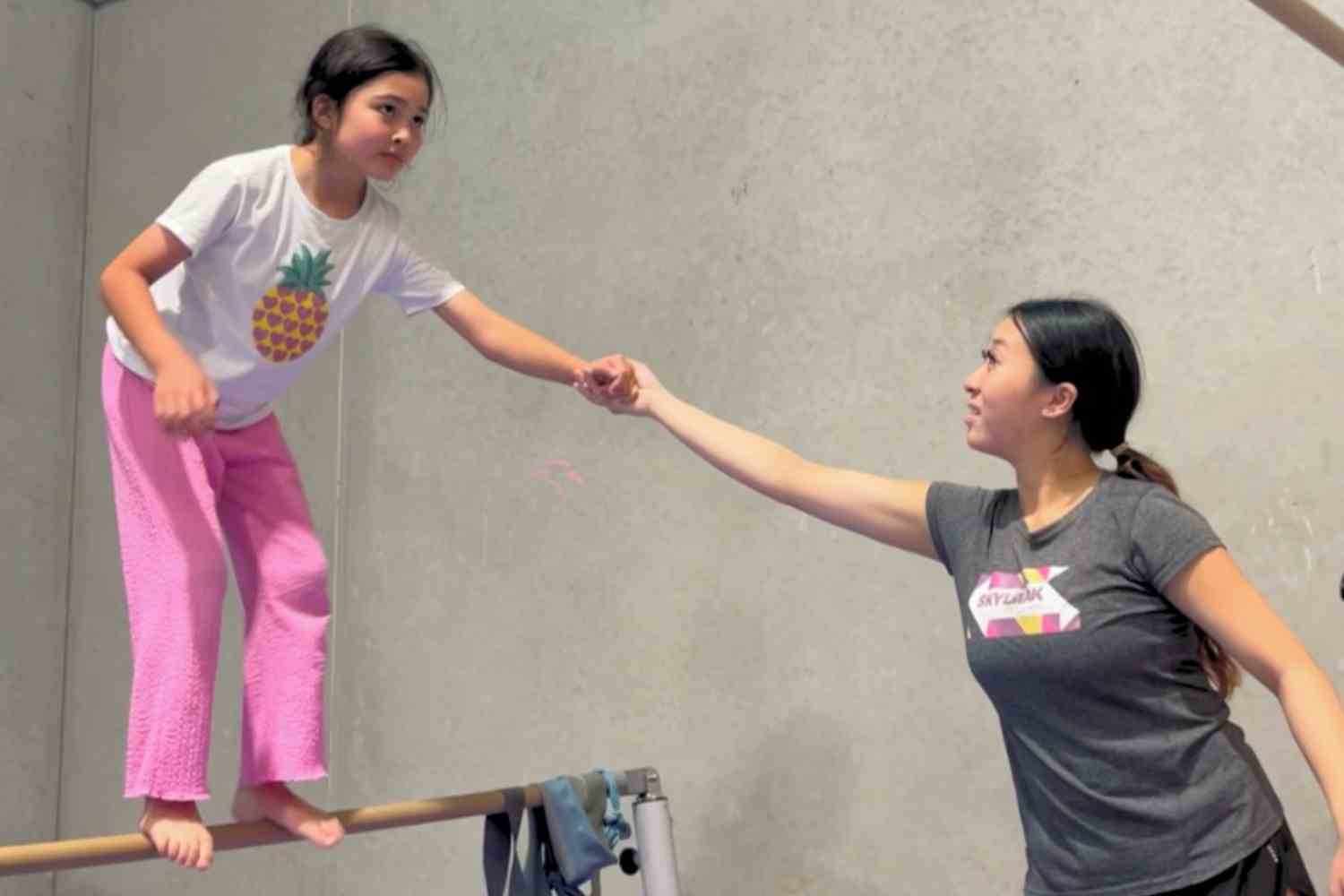
Why Falling Is Inevitable in Gymnastics
A Natural Part of Progress
Falling is something every gymnast experiences—it’s part of the learning process. When you’re trying a new skill, especially one that challenges your strength, balance, or coordination, it’s completely normal to lose control or miss a landing. That’s not failure—it’s progress in motion.
Every time you attempt a new skill, your brain and body are working together to figure out the movement. This is called motor learning—a fancy term for how we train our muscles and brain to work together. Falling gives us information. It shows us what needs adjusting, whether it’s your speed, body position, or timing. In short, falling helps you get better.
It Happens at Every Level
If you’ve ever felt embarrassed about falling, here’s something to remember: even elite gymnasts fall. You can watch international competitions and still see Olympians wobble on a beam or land on their hands and knees after a big tumbling pass. It’s not because they’re not good—it’s because they’re pushing their limits.
Falling doesn’t mean you’re not ready. It means you’re brave enough to try. Every gymnast, no matter their level, has gone through the same process. You’re in good company.
The Mental Side of Falling
Overcoming the Fear of Falling
Let’s be honest—falling can be scary, especially for young gymnasts. The fear of getting hurt, messing up, or feeling embarrassed is real. I see it in gymnasts who hesitate before a skill or freeze up right before takeoff. Fear of falling can hold a gymnast back from giving their full effort, and that hesitation can actually make a fall more likely.
That’s why it’s so important to change how we think about falling. Instead of seeing it as something to avoid, we need to reframe it as something to learn from. Every fall, we learn something—what went wrong, what to adjust, and how to improve next time. Once gymnasts start to see falling as part of the process, their confidence starts to grow.
Coaching Tips for Building Confidence
As a coach, one of the best things I can do is normalise falling in training. We talk about it openly. We even practice how to fall safely so gymnasts know what to do if something doesn’t go to plan.
I also encourage a growth mindset—that means seeing mistakes as opportunities, not setbacks. Every time you fall and get back up, you’re learning, growing, and becoming a stronger athlete.
How to Fall Safely in Gymnastics
Basic Techniques for Safe Falling
As a coach, I always tell my gymnasts that learning how to fall is just as important as learning how to land. We don’t just train skills; we train safety. When a gymnast knows how to fall with control, they reduce the risk of injury and gain the confidence to keep trying. A well-practised fall can be the difference between a little tumble and a trip to the physio.
Here are the key techniques I teach in the gym:
Learning to Roll Out
Rolling out is one of the safest ways to protect your body when you’re falling forward or backwards on a floor or beam.
What I teach:
- Tuck your chin to protect your head
- Round your back and keep your arms soft
- Roll across your shoulder (not straight over your spine)
- Absorb the movement and keep it smooth
Breakfast
This comes from martial arts and can be useful in gymnastics when done correctly.
What I teach:
- Slap the mat with your arms or hands at the moment of impact
- Keep your arms bent, never locked
- Spread the force across a wider area to soften the landing
Protecting the Wrists and Elbows
One of the most common instinctive reactions is to throw your arms out straight when falling, but this is how wrist and elbow injuries happen.
What I teach:
- Always keep a slight bend in the elbows
- Push away from the mat instead of stiff-arming into it
- Stay loose, not rigid
Knowing When to Bail
Sometimes, the safest thing to do is not complete the skill.
What I teach:
- Spot the moment the skill isn’t going to land cleanly
- Commit to a safe exit (like stepping out or rolling away)
- We practice bailing safely from back handsprings, tumbling passes, and bar skills so that it becomes second nature
Using Equipment Smartly
We use equipment to keep athletes safe while they build confidence and technique.
What I use and recommend:
- Crash mats for big skills or early attempts
- Soft blocks and resi pits to break falls gently
- Spotting belts to teach aerial awareness in a controlled way
- Progressions—never skip steps to “get the skill.”
Teaching gymnasts how to fall safely is one of the best investments we can make in their long-term development. The goal isn’t to avoid falling—it’s to be ready for it when it happens. That’s how we build strong, smart, and fearless athletes.
How Coaches and Parents Can Support Gymnasts
As a coach, I’ve learned that helping gymnasts navigate the ups and downs—especially the falls—is a team effort. Coaches and parents both play a significant role in how gymnasts react to falling and, more importantly, how they recover.
Coaches Role
It starts with the training environment. In my gym, we make it clear from day one that falling is expected and okay. We cheer just as loudly for the effort as we do for a clean skill. When gymnasts know they’re not being judged for falling, they’re more likely to take healthy risks and keep trying.
We also teach safe falling techniques as part of our regular curriculum. Just like we teach how to do a cartwheel, we teach how to roll out, bail safely, and protect the body during a fall. That way, gymnasts aren’t caught off guard—they know exactly what to do when something doesn’t go to plan.
Parents’ Role
Parents, your support means everything. If your child falls in training or competition, the best thing you can do is reassure them that it’s normal. Let them know that every gymnast—even the ones they look up to—has fallen hundreds of times.
If you notice they’re feeling nervous or scared after a fall, talk to them about it. Encourage them to share what they’re feeling, and remind them that fear is something they can work through, with time, support, and practice.
When coaches and parents work together to create a safe and encouraging environment, gymnasts feel empowered to take on challenges, learn from their mistakes, and keep growing, even after falls.
Building Confidence After a Fall
One of the most important things we can do after a gymnast falls is help them regain their confidence. It’s normal to feel a little shaken—even scared—after a fall. But with the right approach, gymnasts can bounce back stronger than ever.
Steps to Rebuild Confidence
1. Revisit the Skill in a Controlled Setting
Right after a fall, I always bring the gymnast back to basics. We go back to a safe setup—maybe on a softer mat or with a spot. This helps the gymnast feel in control again, without the pressure of having to repeat the full skill straight away.
2. Talk Through What Happened
Sometimes we sit down and talk it out. I’ll ask, “What did you feel?” or “What do you think went wrong?” Breaking it down helps them process it logically, instead of just holding onto the fear.
3. Take It One Step at a Time
We gradually work our way back to the full skill. I always celebrate the small wins because each one is a step toward rebuilding one’s belief in oneself.
The Importance of Visualisation and Mental Rehearsal
I often ask gymnasts to close their eyes and imagine themselves doing the skill correctly. Mental rehearsal is a powerful tool. It trains the brain to expect success instead of failure. If they see it in their mind first, they’re more likely to feel confident trying it again in real life.
Over time, with patience, practice, and support, gymnasts learn that falling isn’t the end of the story—it’s just a chapter. And every chapter is part of becoming a braver, smarter, more resilient athlete.
Frequently Asked Questions
Should my child stop training after a fall?
Not necessarily. Minor falls are common. A coach will assess the situation and guide you when it’s safe to continue or take a break.
Can falling affect long-term progress in gymnastics?
If fear stops the gymnast from trying, with support and safe practice, falling can lead to stronger progress.
How can I tell if a fall has shaken my child emotionally?
Look for signs like hesitation, frustration, or avoidance of a specific skill. A calm conversation can open things up.
Are there specific drills to help gymnasts regain trust in their skills?
Yes, coaches often use low-pressure drills and progressions to rebuild confidence gradually.
Conclusion
Falling is not a setback in gymnastics—it’s part of the journey. Every gymnast, from beginners to Olympians, experiences falls. What matters most is how we respond to them. By learning to fall safely, staying mentally strong, and being supported by coaches and parents, gymnasts can turn each fall into a powerful learning moment.
As a coach, I remind my athletes that falling doesn’t mean they’ve failed—it means they’re trying something worth doing. With the right mindset and the right tools, every fall becomes a step forward in building courage, skill, and resilience. So keep showing up, keep trying, and know that every time you get back up, you’re becoming a stronger gymnast—and a stronger person.