Gymnastics is an incredible sport. Like a few others, it builds strength, coordination, flexibility, and confidence. But as any coach or gymnast knows, it’s also physically demanding—especially on the joints. With all the tumbling, vaulting, swinging, and landings involved, the body takes a lot of impact, and over time, that can lead to injuries if we’re not careful.
Two of the most commonly injured areas in gymnastics are the wrists and ankles. These joints do a lot of work, whether it’s supporting body weight in a handstand or absorbing force during a dismount. And when they’re not properly prepared or looked after, they’re more likely to get hurt.
As a gymnastics coach here in Melbourne, I’ve seen firsthand how preventable many of these injuries can be with the right training, habits, and education. That’s why I’ve put together this blog—to share practical, easy-to-follow strategies that can help gymnasts stay strong, reduce injury risk, and keep progressing with confidence.
Whether you’re a gymnast, a parent, or a fellow coach, this guide will give you the tools you need to protect your wrists and ankles, for now and in the long run.
Disclaimer:
Just a quick heads-up—everything shared in this blog comes from our own experience as gymnastics coaches and what we’ve seen work in the gym. While we do our best to give helpful, practical advice, it’s always best to check in with a qualified physio, doctor, or sports professional if you’re dealing with pain or injury. Every athlete is different, so getting the right support for your situation is really important!
Understanding Wrist and Ankle Injuries in Gymnastics
Before we dive into prevention strategies, it’s important to understand why these injuries happen and what they typically look like. I’ve learned that when gymnasts and parents understand the “why,” they’re much more likely to take injury prevention seriously.
Common Wrist Injuries
1. Gymnast Wrist (Distal Radius Stress Injury)
This is one of the most common wrist injuries I’ve seen in younger gymnasts, especially those still growing. It’s a stress injury to the growth plate at the end of the radius (the larger bone in the forearm), caused by repeated pressure through the wrist—think of all the handstands, cartwheels, and bar skills that load the wrist in the same direction over and over.
Signs of a gymnast’s wrist can include:
- Ongoing wrist pain, especially during weight-bearing
- Tenderness on the thumb side of the wrist
- Swelling or discomfort after training
I’ve had a few athletes who developed this injury around levels 3–5. The key to managing it was rest, gradual return to skills, and focused wrist conditioning. Early recognition made a big difference.
2. Sprains, Fractures, and Tendonitis
These injuries usually happen from:
- Poor technique (e.g. bent elbows causing uneven pressure)
- Sudden impact (like a missed catch on bars or an awkward vault landing)
Sprains involve overstretching ligaments, fractures involve a break in the bone, and tendonitis is inflammation of the tendons from overuse.
Mild sprains might cause discomfort and weakness, but a more serious injury can mean weeks (or months) of training. That’s why early treatment and prevention are crucial.
3. Overuse vs. Acute Injuries
In gymnastics, both types are common:
- Overuse injuries build up gradually, often unnoticed until pain sets in.
- Acute injuries happen suddenly, like from a fall or poor landing.
Understanding the difference helps us catch issues early. Suppose a gymnast complains of a dull ache after every training. In that case, the session might be an overuse injury developing, and we can usually catch and manage it before it gets worse.
Common Ankle Injuries
1. Ankle Sprains (Especially Lateral Sprains)
These happen when the ankle rolls too far outward, stretching or tearing the ligaments on the outside of the joint. It usually occurs during landings, especially from tumbling or beam dismounts, when the gymnast doesn’t land evenly or loses balance.
Signs include:
- Sharp pain on the outside of the ankle
- Swelling and bruising
- Difficulty putting weight on the foot
One of my gymnasts rolled her ankle coming off the beam—she was in a rush to stick the landing. That moment taught both of us the importance of controlled landings and ankle stability drills.
2. Achilles Tendinopathy
This is an overuse injury of the Achilles tendon, which connects your calf muscle to your heel. In gymnastics, it can be caused by repeated explosive movements, like punching the floor or vault board, and insufficient calf strength or flexibility.
It often starts as a dull pain in the back of the heel during training and can worsen over time if ignored. If treated early, rest and rehab are usually enough. But if left untreated, it can lead to a rupture, which is much more serious.
Tip: If your gymnast is always rubbing their Achilles or limping after floor routines, don’t ignore it. That’s often the first sign of a developing issue.
3. Impact-Related Injuries
Landing on hard surfaces, especially with poor technique or under fatigue, can cause:
- Bone bruising
- Stress fractures
- Joint compression
These types of injuries often show up gradually as persistent soreness, and they’re most common in gymnasts who are training on tough floors or who don’t yet have good landing mechanics.
Risk Factors That Contribute to Injuries
Injury prevention isn’t just about doing more conditioning or buying better gear—it’s also about recognising what increases a gymnast’s risk in the first place. Over the years, I’ve noticed that many injuries come down to a combination of a few key factors. If we stay ahead of these, we give our gymnasts the best chance to stay healthy and confident in their training.
1. Repetitive Impact and Overuse
Gymnastics involves repeating skills to build muscle memory. That repetition is important, but when it becomes too much without proper rest or recovery, injuries start to build.
Wrist pain from bar work or sore ankles from endless tumbling passes—these are classic signs of overuse.
2. Poor Technique or Landing Mechanics
A small technical error repeated over time can put uneven stress on the joints. For example:
- Landing with straight legs increases the impact on ankles and knees.
- Collapsing the wrists on bar skills leads to poor alignment and stress on the growth plate.
It’s not always about the difficulty of the skill—often, it’s the quality of execution that makes the biggest difference.
Tip: I always reinforce soft, bent-knee landings from the start—even for basics like jumps or dismounts. It becomes a habit, and good habits protect the joints.
3. Inadequate Warm-Up or Cool-Down
Skipping warm-ups or rushing through them is like driving without letting your engine warm up first—it puts your body at risk. A proper warm-up increases blood flow, improves flexibility, and activates key muscles.
Similarly, cooling down with stretching and mobility helps reduce soreness and supports recovery.
From the Floor: I’ve had athletes go from stiff and sore during training to much more relaxed and mobile simply by adding a proper 10-minute cool-down. The difference in their recovery was night and day.
4. Muscle Imbalances and Lack of Flexibility
Strong muscles support the joints, but when some muscles are stronger than others—or when flexibility is limited—the body is thrown out of balance. This can lead to compensation and increased stress on vulnerable areas like the wrists and ankles.
Common imbalances in gymnasts include:
- Strong quads but weak glutes
- Tight calves with limited ankle mobility
- Underdeveloped forearms compared to shoulder strength
Coaching Tip: In my program, we run quick strength checks every few weeks. This helps us spot imbalances early before they become injuries.
5. Training on Hard Surfaces or Poor Equipment
The surface you train on makes a huge difference in injury risk. Hard floors, old vault runways, or thin landing mats can increase the force that travels through the wrists and ankles.
While we can’t always control the equipment (especially in school gyms or competitions), we can:
- Use extra mats for landings during training
- Teach athletes how to absorb force properly
- Rotate high-impact events to reduce repetitive stress
6. Growth Spurts During Adolescence
This one often gets overlooked. When gymnasts go through a growth spurt, their bones can grow faster than muscles and tendons can keep up. This leads to:
- Decreased coordination
- Increased stiffness
- There is a higher risk of joint injuries, especially in the wrists and ankles
It’s a temporary stage, but it’s a vulnerable one. During this time, it’s important to focus on:
- Lower impact training
- Extra mobility work
- Strong communication between the gymnast, the coach, and the parent
I had one athlete hit a big growth spurt right before the competition season. Instead of pushing her to peak, we shifted focus to basics and form. She avoided injury and came back stronger—and more confident—the following term.
Prevention Strategies for Wrist Injuries
When it comes to wrist injuries in gymnastics, prevention is all about building strength, developing safe techniques, and supporting the joint through mobility and recovery. As a coach, I’ve found that small, consistent habits are far more effective than any quick fix.
Here are the key strategies we use in the gym to keep wrists strong and protected:
a. Strength and Conditioning
Specific Wrist and Forearm Strengthening Exercises
The wrists aren’t naturally designed to bear body weight for long periods, but with targeted strength work, we can condition them to handle the load safely.
Some of the go-to exercises I use with my gymnasts include:
- Wrist curls and reverse curls with light dumbbells or resistance bands
- Wrist push-ups (on fists, fingertips, and flat hands) for joint control
- Grip strength drills, like hanging from bars or squeezing therapy putty
- Wrist walks on the wall, moving fingers up and down slowly
Coach’s Note: I’ve found these exercises especially helpful for young gymnasts moving up levels. Even just 5–10 minutes twice a week made a big difference in reducing soreness after bar routines.
Importance of Progressive Loading
One common mistake I see is jumping straight into high-impact skills (like backhandsprings or giants on bars) without enough wrist preparation.
Progressive loading means gradually increasing the stress on the joint, allowing the body to adapt safely. For example:
- Start with basic holds (like plank on hands)
- Progress to dynamic drills (like handstand shoulder taps)
- Then, build toward full-skill reps
It’s a long-term approach, but it builds durability and helps gymnasts avoid being sidelined later.
b. Technique & Equipment
Proper Hand Positioning on Apparatus
How a gymnast places their hands on the equipment can have a huge impact on wrist safety.
Some key technical points I reinforce:
- On bars: fingers should wrap properly around the bar, with wrists neutral (not over-extended).
- On the floor and beam, hands should face forward with even pressure through the fingers and palm.
- On the vault, gymnasts must learn to block through the shoulders and not collapse into the wrists.
I once had an athlete constantly feeling wrist pain on back handsprings. We reviewed her technique and realised she was putting all her weight on her thumbs. A simple hand placement adjustment solved the problem.
Use of Wrist Supports or Guards (When Appropriate)
Wrist guards or supports can be helpful for certain gymnasts, especially those with hypermobility or during high-volume bar training.
That said, support should never substitute for proper strength work or technique. They are tools, not solutions.
We use wrist guards during competition season or when gymnasts are returning from injury, but only after assessing their wrist function and strength.
Importance of Drills Before Full-Skill Execution
Jumping straight into full tumbling passes or high bar releases without foundational drills is like running before you can walk.
I always encourage gymnasts to:
- Master basic weight-bearing drills (plank holds, handstand shapes)
- Practice entries and exits slowly
- Use drills to reinforce wrist alignment and impact absorption
This layered approach ensures the joints are ready for the load and helps build confidence, too.
c. Flexibility and Mobility Work
Stretching Routines to Improve Wrist Range of Motion
Tight wrists can lead to compensation in other joints (like the shoulders or elbows), which increases the risk of injury.
In our warm-ups and cool-downs, I always include:
- Wrist extension stretches (palms down, fingers pointing toward the body)
- Wrist flexion stretches (backs of hands on the floor)
- Finger and thumb mobility drills (great for bar grip prep)
These simple routines only take a few minutes, but they help maintain healthy joint function, especially during growth periods.
Foam Rolling and Myofascial Release
Foam rolling the forearms and stretching the hands can ease tension and improve blood flow, which supports recovery after training.
We often use:
- Small massage balls on the palms and forearms
- Forearm rolling with a barbell or foam roller
- Gentle massage techniques after bar-heavy days
Our gymnasts use a massage ball at home while watching TV. It’s easy, effective, and helps with post-training recovery.
Warm-Up and Cool-Down Routines
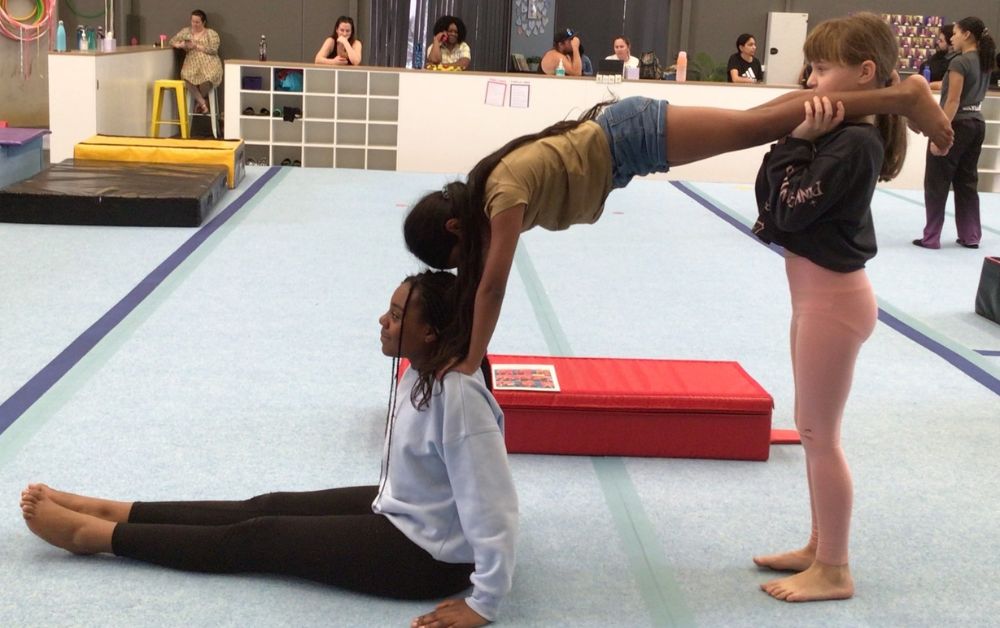
Warm-ups and cool-downs are more than just a routine—they’re a key part of injury prevention. Over the years, I’ve noticed that gymnasts who take these seriously tend to stay healthier, recover faster, and perform better. When it comes to protecting the wrists and ankles, a thoughtful approach to preparation and recovery makes a real difference.
Components of an Effective Warm-Up for Wrist and Ankle Joints
A good warm-up should:
- Raise the heart rate
- Activate the muscles used in gymnastics
- Mobilise the joints that will take the impact
For the wrists, I recommend:
- Wrist circles and figure-eights
- Palm pulses (pressing palms down and gently rocking forward and back)
- Forearm squeezes using a light stress ball or towel
For the ankles:
- Calf raises (on two feet and single leg)
- Ankle rolls in both directions
- Light hopping in place to stimulate the muscles around the joint
This warm-up takes less than 10 minutes but sets a strong foundation for safer training.
Dynamic Stretching Before Training
Static stretching (holding long stretches) has its place, but before training, we want to focus on dynamic movements that gently stretch and activate the body simultaneously.
Some dynamic stretches we use in our gym:
- Walking lunges with a twist
- Leg swings (front to back and side to side)
- Arm circles and shoulder rolls
- Hip and ankle mobility walks (like inchworms and toe walks)
These movements not only help loosen the body but also mentally prepare the athlete to focus and move well from the very first skill.
Cool-Down Stretches and Ice for Recovery
After training, a proper cool-down helps lower the heart rate, flush out lactic acid, and reduce stiffness. This is especially important after heavy tumbling or bar work that loads the wrists and ankles.
Our cool-down typically includes:
- Light jogging or walking
- Static stretches for wrists, calves, hamstrings, and shoulders
- Deep breathing helps the body relax
If there’s any lingering soreness or inflammation, especially after high-impact training, icing the wrists or ankles for 10–15 minutes can help manage swelling and speed up recovery.
Coaching Insight: I always tell my athletes that how they finish training is just as important as how they start. A five-minute cool-down may not seem like much, but over time, it keeps the body feeling strong and resilient.
Periodisation and Load Management
As gymnasts get stronger and start learning harder skills, it becomes even more important to manage their training load. Just like you wouldn’t drive a car on full throttle all the time, you can’t train at maximum intensity every day without risking breakdown.
Importance of Rest and Recovery in a Training Plan
Rest days aren’t just a break—they’re where the body rebuilds and gets stronger. Overtraining, especially without enough recovery, is a major cause of overuse injuries in the wrists and ankles.
In our program, we plan:
- Lighter sessions after intense training days
- Active rest (like stretching or basic conditioning) instead of full-impact skills
- Recovery-focused weeks after comp season or growth phases
This helps athletes stay consistent and avoid burnout.
Monitoring Volume of High-Impact Skills
It’s easy to lose track of how many back handsprings or bar routines a gymnast does in one session, but the joints remember. Tracking volume helps us avoid overload.
Ways to manage volume:
- Limit the number of repetitions for high-impact tumbling or vault drills
- Rotate training stations to avoid overloading one area (like wrists on bars)
- Listen to the athlete—if they’re feeling sore or fatigued, it’s better to reduce reps than push through
A few years ago, I had a very driven athlete who loved practising beam dismounts—dozens per session. She ended up with an overuse ankle injury. Since then, I’ve built “skill caps“ into training plans to avoid those situations.
Cross-Training to Reduce Repetitive Strain
Cross-training adds variety and can reduce the repetitive strain that leads to overuse injuries.
Some options I’ve found effective:
- Swimming or cycling for cardio without impact
- Pilates or yoga to build strength and flexibility
- Core conditioning or balance drills on unstable surfaces
These activities give the body a break while still building useful athletic skills.
When to Seek Help
Even with the best prevention strategies, injuries can still happen. What matters most is how early they’re addressed. Ignoring pain or trying to “train through it“ is one of the fastest ways a minor issue becomes a major problem.
Signs of Overuse or Acute Injury That Should Not Be Ignored
If a gymnast is experiencing any of the following, it’s time to pause and evaluate:
- Persistent wrist or ankle pain that lingers during or after training
- Swelling or bruising around a joint
- Loss of range of motion or weakness
- A “pop“ or sharp pain during a skill
- Difficulty bearing weight or gripping
I always remind gymnasts that pain is not weakness—it’s information. We don’t ignore warning signs. We act early, adjust training, and make sure recovery is happening properly.
Importance of Early Intervention and Proper Rehab
Catching injuries early means faster recovery. It also prevents long-term damage that can interfere with progression or even force time off from the sport.
Rehab should always include:
- Rest from the aggravating skill
- Strengthening the surrounding muscles
- Gradual return to full training (not jumping straight back in)
A proper return-to-training plan protects the healing tissue and helps the athlete regain confidence in the joint.
Working With a Sports Physiotherapist or Athletic Trainer
As a coach, I know my limits—and I always encourage families to work with qualified health professionals when injuries show up. A sports physio, especially one familiar with gymnastics, can:
- Provide accurate diagnosis
- Design a rehab program tailored to the athlete
- Coordinate with coaches for a safe return-to-sport plan
Building a support team around the athlete—coaches, parents, and health professionals—makes all the difference in long-term development.
Role of Coaches and Parents
In gymnastics, preventing injuries isn’t just about exercises and equipment—it’s about culture. The environment we create as coaches and parents plays a massive role in how young athletes care for their bodies and respond to discomfort or pain. The earlier we build this awareness, the better the outcomes, both physically and emotionally.
Encouraging Athletes to Speak Up About Pain
One of the most important lessons I teach in the gym is that pain is not something to hide. Young gymnasts, especially those who are ambitious and goal-driven, sometimes think that speaking up about soreness means they’re weak or letting others down. That couldn’t be further from the truth.
As coaches and parents, we need to:
- Ask open-ended questions after training (e.g., “How did your body feel today?”)
- Reassure them that it’s okay—and necessary—to report discomfort
- Reward honesty, not silence
I once had a young gymnast who was quietly struggling with wrist pain but didn’t want to miss training before a comp. It only came out when I noticed her hesitating on cast handstands. We had a conversation about how being honest helps us make smarter decisions together. That moment built trust, and she’s been much more confident speaking up ever since.
Creating a Supportive, Injury-Aware Training Environment
Gymnasts thrive when they feel safe, physically and emotionally. An injury-aware environment isn’t just about spotting issues early; it’s about helping athletes understand their bodies and make smart decisions.
Some ways we promote this in our gym:
- Educating athletes on how injuries happen (without fear)
- Regular check-ins on physical and mental load
- Modifying training based on how they feel, not just what’s scheduled
- Talking about load, rest, and rehab as normal parts of training
Parents can help reinforce this at home by encouraging rest, supporting recovery days, and avoiding pressure to “push through pain.“ When gymnasts see that their team values long—term health—both at home and in the gym—they become more self-aware and responsible.
Balancing Skill Progression With Physical Readiness
There’s always a temptation to rush progress, especially when competitions are approaching or peers are moving up quickly. However, skill progression should never come at the expense of physical readiness.
As coaches, it’s our job to:
- Break skills into smaller, safe progressions
- Emphasise the quality technique before the difficulty
- Watch for signs of fatigue or overload before deciding when to introduce harder landings, twisting skills, or increased reps.
Parents also play a key role here. It’s helpful to:
- Trust the coach’s timing—even when it feels slow
- Ask questions about progression plans and how they relate to physical development
- Celebrate mastery, not just new moves
When we prevent a gymnast from learning a new tumbling pass, it’s never about holding them back—it’s about protecting them. Skill readiness is more than just ability. It’s about joint strength, control, and consistency under fatigue.
Frequently Asked Questions
Are ankle braces or wrist guards recommended for daily use?
Only if advised by a physio or coach. If used long-term, overuse of braces can reduce muscle activation without addressing the root cause.
How often should gymnasts do joint-specific strength training?
Targeted wrist and ankle strength is ideal 2–3 times per week outside of regular skill training.
Can younger gymnasts (under 10) get overuse injuries?
Yes. Even young gymnasts are at risk, especially during growth spurts or if they train high-impact skills too frequently.
What kind of shoes should gymnasts wear outside the gym to protect ankles?
Supportive athletic shoes with proper arch and heel support help protect developing joints during everyday activities.
Conclusion
Wrist and ankle injuries may be common in gymnastics, but they are not inevitable. With the right combination of smart training, body awareness, proper recovery, and support from coaches and parents, gymnasts can stay strong, confident, and consistent in their performance.
As a coach here in Melbourne, I’ve seen how injury prevention not only protects athletes physically but also helps them develop patience, discipline, and a deeper respect for their bodies. Gymnasts who learn to train smart often progress the furthest, not just because of their talent but also because they stay healthy enough to keep going.
So, whether you’re a young gymnast, a parent, or a coach, remember this: prevention is a daily habit, not a one-time fix. Make time for warm-ups, listen to soreness, respect rest days, and never be afraid to speak up when something doesn’t feel right.
Protecting your wrists and ankles today means you’ll be able to tumble, swing, and stick landings for many seasons to come.
Whether you’re a gymnast, a parent, or a fellow coach, this guide will give you the tools you need to protect your wrists and ankles—for now and in the long run.