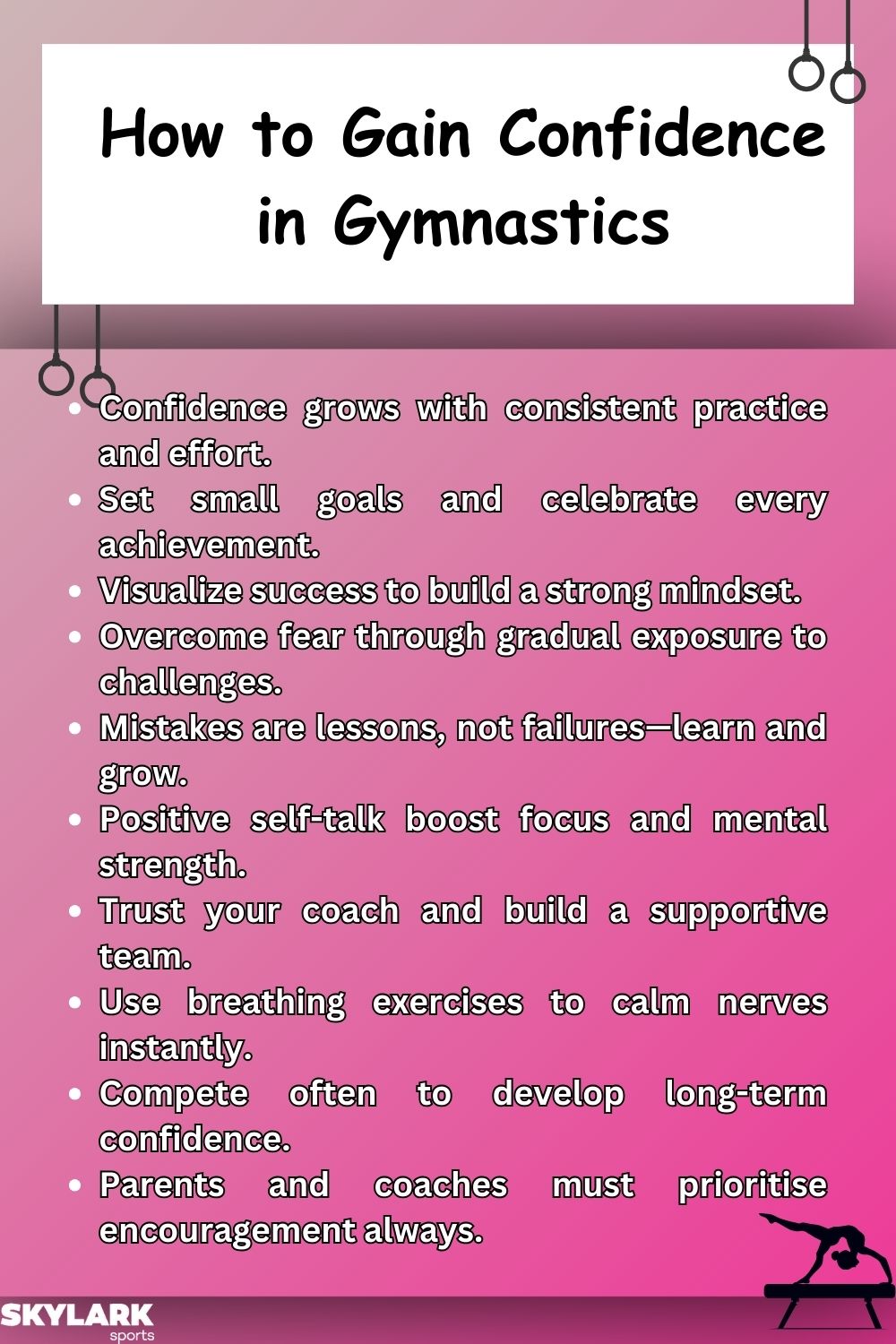
Confidence is the secret ingredient that every gymnast needs to succeed. It’s what helps you push through tough routines, tackle new skills, and perform with ease. Without confidence, even the simplest move can feel overwhelming. With it, you can soar to new heights—both literally and figuratively!
When I first started coaching in gymnastics, I quickly realized that even the most physically talented gymnasts could struggle if they doubted themselves. On the flip side, I’ve seen gymnasts with less natural ability thrive simply because they believed in their potential. Confidence is a skill, just like a cartwheel or a handstand, and the good news is you can develop it with practice and the right mindset.
In this blog, I’ll share practical, experience-based tips to help you build confidence in gymnastics. Whether you’re a beginner stepping into the gym for the first time or an experienced athlete looking to fine-tune your mental game, these insights will give you the tools you need to feel stronger and more self-assured. Let’s dive into how you can take charge of your confidence and reach your full potential in gymnastics!

The Role of Confidence in Gymnastics
Confidence is one of the most important qualities a gymnast can have. It’s the bridge between physical ability and mental readiness, allowing athletes to perform at their best. In gymnastics, where the margin for error is razor-thin, confidence ensures that you approach skills, routines, and competitions with focus and determination rather than fear or hesitation.
Gymnastics is a sport that balances physical and mental challenges. While building strength, flexibility, and coordination is crucial, those abilities mean little without the confidence to trust your body and execute under pressure. Whether it’s sticking a landing on the balance beam or attempting a new move on the uneven bars, confidence plays a vital role in how gymnasts handle these moments.
Take the example of Simone Biles, widely regarded as one of the greatest gymnasts of all time. Her remarkable achievements are not just a result of her physical talent but also her unshakable self-belief. Biles has often spoken about how her confidence helps her tackle difficult skills, even under the intense pressure of international competitions.
Confidence also impacts how quickly gymnasts learn new skills. When you trust yourself, you’re more willing to take risks and embrace challenges, which is essential for growth in the sport. For instance, if you’re learning a back handspring, self-doubt can lead to hesitation, increasing the risk of mistakes or even injury. On the other hand, approaching the skill with confidence allows you to commit fully, making it easier to improve with practice.
Overcoming Fear in Gymnastics
Fear is a natural part of gymnastics, even for experienced athletes. Whether it’s fear of falling, trying a new skill, or competing in front of a crowd, these anxieties can hold gymnasts back if they are not addressed. The key to building confidence in gymnastics is learning how to face and manage these fears effectively.
Common Fears Gymnasts Face
Many gymnasts deal with similar fears. One of the most common is the fear of falling, especially when working on high apparatuses like the balance beam or uneven bars. Even a small wobble can trigger self-doubt. Trying new skills can also be intimidating, as gymnasts worry about getting hurt or making mistakes. Competitions bring their own set of fears, such as performing poorly or letting down teammates and coaches.
These fears are completely normal, but they don’t have to define your gymnastics journey. Instead, they can become opportunities to grow mentally and physically.
Gradual Exposure to Challenging Moves
One of the best ways to overcome fear is through gradual exposure. If a particular skill feels daunting, break it down into smaller, manageable steps. For example, if you’re afraid of attempting a back tuck, start by practising jumps into a foam pit or using a spotter. Over time, as you build muscle memory and confidence, the full move will feel less intimidating.
The Importance of Practicing Under Supervision
Having a coach or spotter present can make a world of difference. Knowing that someone is there to guide and support you creates a safety net that helps you push past fear. Coaches can also provide constructive feedback, ensuring you’re practising correctly and reducing the likelihood of mistakes.
Visualization Techniques to Mentally Prepare
Visualization is a powerful tool for overcoming fear. Before attempting a skill, please close your eyes and imagine yourself executing it perfectly. Picture every detail: your body position, the feeling of control, and the successful landing. This mental rehearsal not only calms your nerves but also trains your brain to approach the skill with confidence.
Fear doesn’t have to hold you back in gymnastics. By addressing it head-on with gradual practice, trusted supervision, and mental preparation, you’ll find yourself feeling more confident and ready to take on challenges.

Practical Tips to Build Confidence
Confidence doesn’t appear overnight—it’s built through consistent effort, smart strategies, and the right mindset. Here are practical steps to help gymnasts develop a strong sense of self-belief.
Set Achievable Goals
Start by setting realistic, bite-sized goals. Instead of focusing on mastering a complex routine right away, aim to perfect a single element of it. Celebrate small wins, like improving your form on a cartwheel or landing a new skill for the first time. These incremental successes build momentum and keep motivation high.
Tracking your improvements is another key to building confidence. Use a notebook or an app to log your progress, whether it’s a higher jump, a cleaner dismount, or fewer stumbles on the balance beam. Seeing how far you’ve come gives you a sense of accomplishment and reinforces the idea that you’re capable of growing.
Practice Consistently
Consistency is the foundation of confidence in gymnastics. The more you practice a skill, the less intimidating it becomes. Repetition not only improves muscle memory but also reduces anxiety because you start to trust your body to perform automatically.
When you train regularly, you build a deep familiarity with your abilities. This trust in yourself comes in handy during high-pressure situations like competitions. Consistent practice transforms nervousness into focus and gives you the confidence to perform with precision.
Learn from Mistakes
Mistakes are inevitable in gymnastics, but they don’t have to shake your confidence. Instead of viewing them as failures, think of them as stepping stones to improvement. Every time you fall, stumble, or miss a landing, you gain valuable insight into what to adjust next time.
Take inspiration from athletes who turned setbacks into comebacks. For instance, many Olympic gymnasts have faced injuries or errors, only to bounce back stronger through persistence and learning. By embracing mistakes as part of the process, you develop resilience and confidence in your ability to overcome challenges.
Positive Self-Talk
Your internal dialogue has a huge impact on your confidence. Negative thoughts like “I can’t do this” or “What if I mess up?” can quickly undermine your performance. Replace these doubts with positive affirmations such as, “I’ve practised this, and I’m ready,” or “I am strong, capable, and prepared.”
Repeating positive phrases boosts your mental resilience and helps you approach each skill or routine with a can-do attitude. Over time, these affirmations become second nature, and your confidence will grow stronger with every repetition.
Work with a Supportive Coach or Team
The people around you play a crucial role in building your confidence. A supportive coach can offer constructive feedback while cheering you on, creating an environment where you feel safe to push your limits. Similarly, teammates who encourage and celebrate your efforts can make a huge difference in how you view yourself.
Trust is key in these relationships. When you trust your coach’s expertise and your team’s camaraderie, you’re more likely to feel confident in your abilities. Knowing you’re not alone in your journey makes it easier to take on challenges and believe in your potential.
By setting goals, practising consistently, learning from mistakes, staying positive, and relying on the support of others, you’ll create a solid foundation for confidence. Remember, confidence isn’t just a feeling—it’s a skill you can develop with effort and the right approach.
Mental Preparation for Gymnastics
Success in gymnastics isn’t just about physical ability—it also requires a strong mental game. Preparing your mind before routines or performances can help you stay focused, calm your nerves, and approach challenges with confidence. Here are some mental strategies that can make a big difference.
Importance of Visualization Before Routines
Visualization is a powerful tool for gymnasts. Before stepping onto the mat, take a moment to picture yourself performing your routine flawlessly. Imagine every detail: the feel of your body moving, the timing of each skill, and the sense of pride after a perfect landing. By visualizing success, you train your brain to believe in your ability to achieve it.
This technique is especially helpful for overcoming nerves or tackling new skills. When your mind has already “rehearsed” the routine, your body is more likely to follow through with confidence. Many top gymnasts swear by visualization as part of their preparation process.
Breathing Exercises to Calm Nerves
Nerves are normal in gymnastics, but they don’t have to control you. Breathing exercises can help you calm down and regain focus. A simple technique is the 4-4-4 method: inhale deeply for four counts, hold your breath for four counts, and exhale slowly for four counts. Repeat this a few times before your routine.
Deep breathing helps reduce the physical symptoms of anxiety, such as a racing heart or shaky hands. It also gives you a moment to reset mentally so you can step into your performance with a clear head.
Using Mindfulness to Stay Focused
Mindfulness is about staying present in the moment, which is essential for high-pressure situations in gymnastics. Instead of letting your mind wander to what might go wrong or what others might think, focus on what’s happening right now—your breathing, your body’s movements, and the steps of your routine.
To practice mindfulness, try a grounding technique like naming five things you can see, four you can feel, three you can hear, two you can smell, and one you can taste. This exercise shifts your attention away from fear or distractions and keeps you rooted in the present.
Mental preparation doesn’t just help with nerves—it sets the tone for a confident and focused performance. By incorporating visualization, breathing exercises, and mindfulness into your routine, you can strengthen your mental game and approach gymnastics with greater self-assurance.
Confidence in Competitive Gymnastics
Competing in gymnastics is both thrilling and nerve-wracking. The pressure to perform perfectly in front of judges and an audience can challenge even the most experienced athletes. However, competitions also provide some of the best opportunities to build lasting confidence. By using smart strategies to manage anxiety and focus on personal growth, you can turn competition days into confidence-boosting experiences.
Preparing Mentally and Physically Before the Event
Solid preparation is the key to feeling confident during a competition. On the physical side, consistent practice ensures that you’ve mastered your routine and are ready to perform. To feel completely prepared, make sure you’ve practised not only the skills but also the transitions, pacing, and flow of your routine.
On the mental side, use visualization to rehearse your performance in your mind. Imagine walking onto the floor, hitting every move with precision, and finishing strong. Pair this with positive self-talk, such as, “I’ve trained hard, and I’m ready for this.” Preparation eliminates the uncertainty that feeds anxiety and allows you to focus on executing your skills with confidence.
Staying Present and Focusing on Personal Goals
During a competition, it’s easy to get distracted by other competitors, the audience, or even the thought of scores. Staying present is crucial to maintaining confidence. Focus on your own goals and what you can control—your performance.
Set personal objectives for the event, such as hitting a clean routine or improving a specific skill. These smaller, self-focused goals keep you grounded and allow you to measure success on your terms, regardless of the outcome. When you focus on what you’ve worked for and stay in the moment, the pressure feels more manageable.
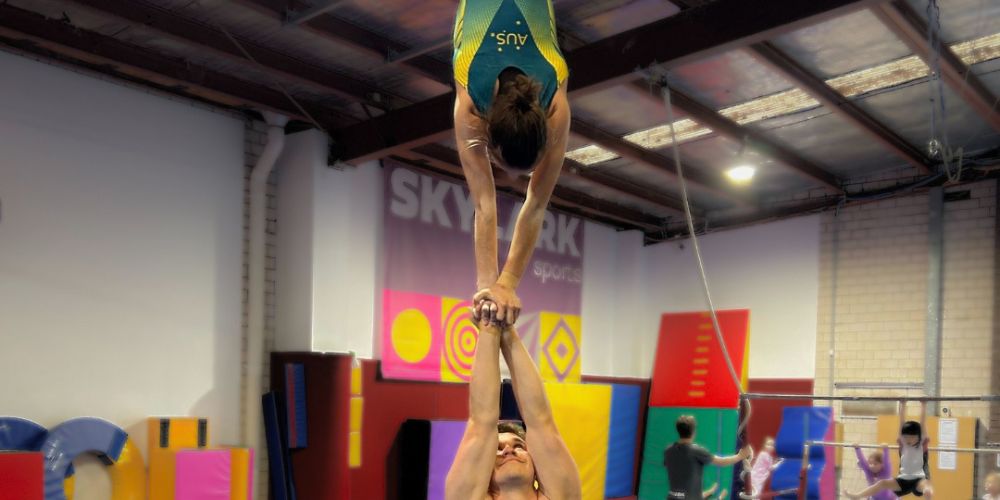
How Competing Helps Build Long-Term Confidence
Every competition, win or lose, is a chance to grow. Facing the challenge of performing under pressure builds resilience and self-trust over time. The more you compete, the more familiar the experience becomes, reducing nerves and making you feel more comfortable in high-stakes situations.
Even when things don’t go perfectly, competitions teach valuable lessons. You could learn how to recover from a mistake or how to adjust your mindset for the next event. These experiences shape you into a more confident and adaptable gymnast.
Remember, confidence in competition isn’t just about placing on the podium. It’s about trusting your preparation, staying focused on your goals, and using every event as a stepping stone to becoming the best version of yourself. With each competition, you’ll find yourself growing stronger, both mentally and physically.
Tips for Parents and Coaches
Supporting a gymnast on their journey requires a delicate balance of encouragement, patience, and understanding. Both parents and coaches play vital roles in shaping a gymnast’s confidence, but their approach can make all the difference. Here are seven essential tips for creating a positive and nurturing environment for young athletes.
Encourage Effort Over Results
Parents and coaches should praise gymnasts for the hard work they put into their training rather than their scores or medals. Praise phrases like, “You worked so hard on that routine,” or “I can see how much effort you’ve put into improving!” This helps gymnasts build a mindset that values progress and persistence, not just winning.
By emphasizing effort, you teach athletes to measure success by their personal growth, which is a strong foundation for long-term confidence.
Avoid Comparisons
Comparing gymnasts to their peers can undermine their confidence and create unnecessary pressure. Every athlete progresses at their own pace, and it’s important to acknowledge individual achievements.
Instead of saying, “Why can’t you do it like them?” try, “I’m proud of how much you’ve improved since last week.” This helps gymnasts focus on their journey rather than competing for validation.
Provide Constructive Feedback
Feedback is crucial for coaches especially, but how you deliver it matters. Instead of focusing solely on what went wrong, highlight what went right and frame corrections in a supportive way.
For example, say, “Your form on the landing is improving; let’s work on tightening your core for the next step.” This approach ensures gymnasts feel motivated to improve without feeling discouraged.
Celebrate Small Wins
Whether it’s mastering a new skill or simply building up the courage to try something challenging, small victories deserve recognition. Celebrate these moments with kind words, high-fives, or even a treat after practice.
Acknowledging incremental progress reminds gymnasts that confidence grows with every step forward, no matter how small.
Foster Open Communication
Gymnasts should feel comfortable expressing their feelings, whether it’s fear, frustration, or excitement. Parents and coaches can create this space by actively listening and showing empathy.
Ask open-ended questions like, “How did you feel about your performance today?” or “What can I do to support you better?” This builds trust and allows gymnasts to share their thoughts without fear of judgment.
Model a Positive Attitude
Athletes often mirror the attitudes of the adults around them. Parents and coaches should model positivity, even in challenging situations. If a gymnast struggles with a skill, avoid showing frustration. Instead, reinforce a message of patience and perseverance.
For example, say, “Everyone has tough days, but I know you’ll get there with practice.” This attitude helps gymnasts stay optimistic and resilient.
Know When to Step Back
Sometimes, the best way to support a gymnast is to give them space to navigate their journey independently. Parents should avoid micromanaging every aspect of their training and trust their coaches to guide them.
Coaches, too, should recognize when to let gymnasts take ownership of their routines and decisions. Encouraging independence fosters self-reliance, which is a cornerstone of confidence.
Frequently Asked Questions
Can mental training benefit young gymnasts as much as physical training?
Absolutely! Techniques like visualization, mindfulness, and breathing exercises can build confidence and mental resilience, just like drills improve physical skills.
How do I know if a coach is fostering confidence in their athletes?
A good coach provides constructive feedback, celebrates progress, and communicates with empathy. If your gymnast feels supported and motivated, their coach is likely a positive influence.
Are there any books or resources to help gymnasts with confidence?
Yes! Books like Mind Gym by Gary Mack or The Champion’s Mind by Jim Afremow are great for building a strong mental approach to sports.
How can gymnasts handle pressure during major competitions?
Focus on personal goals rather than external expectations, and use calming techniques like deep breathing or grounding exercises to stay centred.
Conclusion
Parents and coaches have a shared responsibility to nurture confidence in gymnasts. By focusing on effort, providing thoughtful feedback, celebrating progress, and modelling positivity, you can create an environment where athletes feel supported and empowered. Remember, the ultimate goal is to help gymnasts believe in themselves—both in the gym and beyond.