“I left the class feeling so embarrassed and like a bad mum.”
When I read this comment from a parent on Reddit after her toddler’s first gymnastics class, my heart sank. Not because her child had a meltdown (that part’s completely normal), but because she felt like she was the only one struggling. If you’ve been there too, please know this: you’re not alone, and you’re not a bad parent.
As someone who works with toddlers every day at Skylark Sports, I’ve seen every kind of reaction on the first day – wide-eyed excitement, shyness, giggles, and yes, full-on meltdowns. It’s all part of how toddlers learn, grow, and get used to new experiences.
In this blog, I want to walk you through why tantrums happen at gymnastics, what the research says about toddler development, and how you can support your little one (and yourself) through those tricky first classes. You’ll also hear from birth parents and get some helpful tips to make things feel a little easier.
The Reality of Toddler Gymnastics Classes
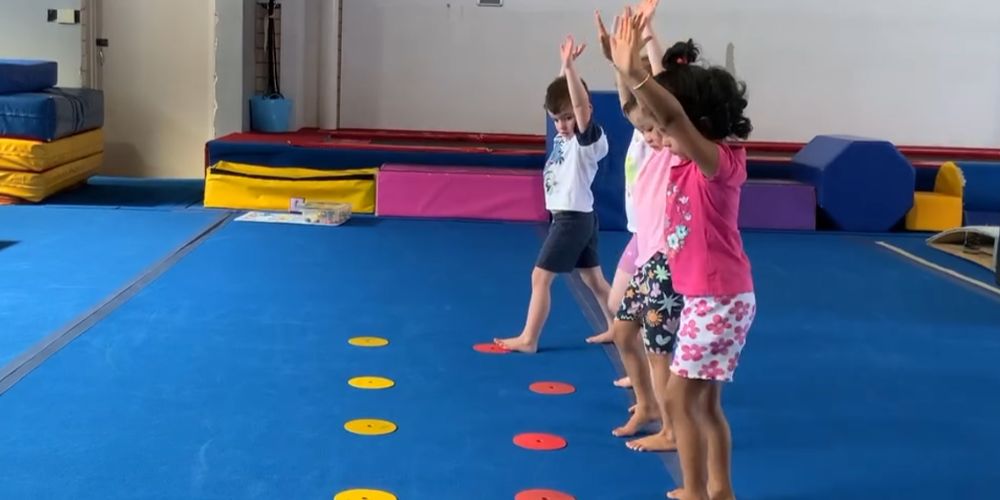
Toddler gymnastics classes are often open to children from when they start walking up to around three years old. That sounds simple enough, but anyone who has spent time around toddlers knows that a 20-month-old and a nearly three-year-old can be worlds apart. One might still be figuring out how to walk confidently, while the other is already jumping, climbing and following instructions.
Most toddler classes are designed to be playful and low-pressure, with soft mats, colourful equipment and music to keep things fun. Some are more structured, where coaches guide the group through short activities, while others are more free-flowing and based on exploration. The balance between structure and play can vary a lot between gyms.
One mum on Reddit shared how overwhelmed she felt when her 20-month-old daughter struggled to stay with the group. The other children, many of whom had been attending for a while, were able to sit, listen and follow the coach’s directions. Her daughter, on the other hand, just wanted to explore everything at once. Every time she tried to bring her back to the group, it ended in a tantrum. She wrote, “I felt like everyone was staring at us and judging me for not being able to control my child.”
This feeling is more common than you might think, and part of the challenge comes from the wide age range being grouped. Some classes are not designed with enough flexibility to cater to different developmental stages. While one child might be ready to take part in a circle time or wait their turn on the beam, another might be at a stage where that is not realistic yet, and that is okay.
The truth is, toddlers develop at their own pace. What looks like misbehaviour is often just a sign that your child is still learning how to manage new spaces, new routines and big feelings.

Why Toddlers Melt Down at Gymnastics
Overstimulation and Excitement
If your toddler had a meltdown in gymnastics class, overstimulation could be one of the main reasons. For many little ones, it is their first time in a big, open space filled with movement, sound, and energy. It can be very exciting… and also very overwhelming.
Here’s why your child might be reacting this way:
Everything is new
The gym is full of colours, climbing frames, soft mats, and equipment they have never seen before. Other children move quickly around them, music plays, and coaches give instructions. It is a lot to take in, especially if they are still learning how to handle busy environments.
They want to explore everything at once
One mum on Reddit explained how her 20-month-old “wanted to go everywhere and do everything” during her first class. This is a really common reaction. When toddlers see so many fun things at once, they do not know how to choose – they want to try it all immediately. When we ask them to stop and wait, it can lead to tears and frustration.
They don’t know how to say, ‘This is too much’
Toddlers are still learning how to express their emotions. When they feel overwhelmed, they do not have the words to explain it. Instead, they might cry, run off, yell, or throw themselves on the ground. It can feel dramatic in the moment, but this is how toddlers cope when their brains are overloaded.
If this sounds like your child, please don’t worry. You are not alone, and you are not doing anything wrong. Overstimulation is a normal part of adjusting to new experiences, and with time, your little one will start to feel more comfortable.
What the Research Says
Even if it feels like all your toddler did during gymnastics was cry or run off, that class time is still supporting their development in important ways. Here is what the research tells us:
Physical Development Benefits of Gymnastics
A study published in Frontiers in Psychology explored how educational gymnastics affects young children’s physical development. The results showed that it significantly improves postural control and balance, which are key building blocks for all kinds of movement, from walking steadily to jumping with confidence.
So even when a class doesn’t go perfectly, your toddler is still learning. Their bodies build strength, coordination, and spatial awareness just by being in that environment and trying the activities.
Structured Programs Improve Coordination and Control
Another study on PubMed followed a group of children through a 16-week gymnastics program and found measurable improvements in physical fitness, especially in balance and object control skills.
This tells us that consistency matters. It is completely normal for the first few sessions to feel messy or emotional. However, over time, as toddlers become more familiar with the setting and routines, their coordination, focus, and emotional regulation all start to grow. Gymnastics is not a quick fix. It is a long-term investment in your child’s development.
What Other Parents Are Saying
Sometimes the most helpful thing is knowing you are not the only one going through it. Here are some key takeaways from parents sharing their experiences online:
Feeling Embarrassed and Judged
In this Reddit thread, one mum describes how her daughter was excited but overwhelmed, resulting in tantrums throughout the class. She felt like other parents were staring and silently judging her. Many replies reassured her that toddler meltdowns in new environments are more common than people admit, and that it does not reflect on your parenting.
Confusion About Age-Appropriate Classes
Another parent, in a post on r/Gymnastics, was unsure whether their child was in the right type of class. Some classes felt too strict, others too chaotic. It highlights how difficult it can be to find a program that matches your toddler’s current stage of development.
Readiness Over Rigid Age Rules
In a discussion on ChalkBucket, parents and coaches talked about whether children should stay in preschool gymnastics until age five. The takeaway? It’s less about age and more about readiness. Some toddlers thrive in structure early on, while others need more time to warm up and feel secure.
What You Can Do (Without Feeling Like a Bad Parent)
First, let’s say this clearly – you are not a bad parent because your toddler cried, screamed or bolted during gymnastics. These reactions are a normal part of early childhood, especially when faced with a new and exciting environment.
Here are a few things you can do to support your child (and yourself) through the early stages:
1. Manage Expectations – for You and Your Toddler
It’s easy to assume that everyone else’s child is following instructions and behaving perfectly. But many of them had a rocky start, too. It might take a few sessions for your toddler to feel settled, and that is completely fine.
2. Talk About the Class Before and After
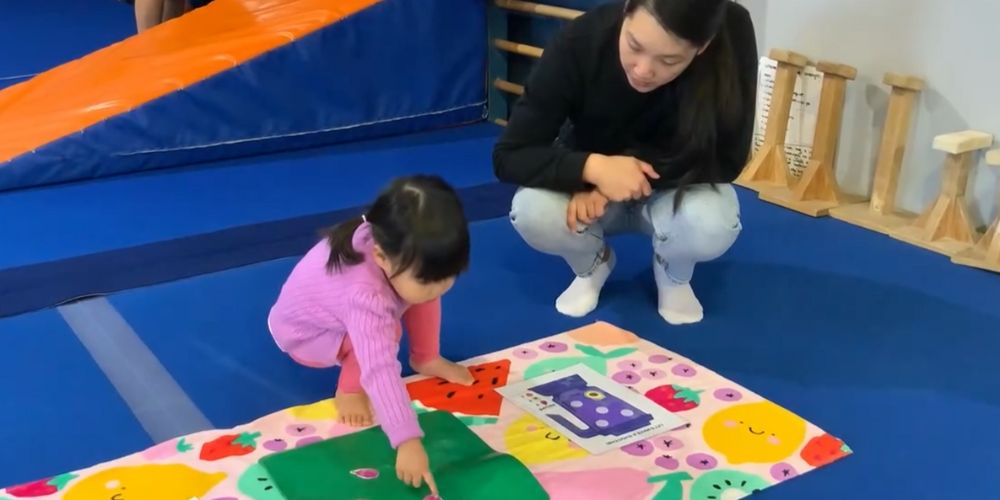
Help your child feel more confident by talking about the class at home. You can say things like, “First we sit with the coach, then we go to the beam, and then we do a big jump!” You can also name their feelings after class: “It felt tricky today when you had to wait your turn, didn’t it?”
3. Focus on Connection, Not Correction
When your toddler has a meltdown, it’s tempting to correct their behaviour straight away. But they will learn much more from calm reassurance. Sit with them, help them regulate, and keep your voice soft. The emotional safety you give them will help more than any time-out ever could.
4. Choose a Class That Matches Their Stage
If your child is under two or more active or sensitive, look for classes that are more exploratory and less structured. Ask if you can trial a class or speak to the coach about how they manage different developmental needs. Sometimes, it takes the right environment to see a big difference.
5. Be Kind to Yourself
Gymnastics is meant to be fun, and it will be, in time. You are doing something wonderful by giving your child a chance to move, explore and grow. Even on the hard days, you’re building their confidence – and your own too.
Final Thoughts: It’s Just the Beginning
One meltdown doesn’t define your toddler’s gymnastics journey – and it definitely doesn’t define you as a parent. What might feel like a disaster in the moment is actually a normal part of adjusting to something new. These classes are designed to help little ones explore, build confidence and develop new skills, and it often takes a bit of time for that to happen.
As the research on postural control and longer-term development benefits has shown, gymnastics supports your child in ways that are not always immediately visible. Just showing up, being part of the environment, and giving things a go is progress.
You’ve also heard from other parents, like the one on Reddit who left class feeling embarrassed and those wondering whether their child was even in the right group. These shared stories remind us all that you are not alone and that you are not doing it wrong. Parenting through big feelings is hard, especially when it feels public. But your presence, care, and willingness to keep trying mean everything to your child.
So if today was rough, try again next week. Many of the confident little gymnasts you see bouncing around the room now started with the same struggles. With time, structure and support, your toddler will likely come to love these classes – and so will you.